

Interiors That Age Well: Why I Design for Your Story, Not Trends
I've believed this for a long time, well before I had a name for it: the rooms people keep loving are rarely the ones assembled around whatever happens to be everywhere that year. They're the rooms built through experience.
Interiors that age well are built on provenance rather than trends — objects chosen for craftsmanship, personal meaning and how they'll wear over time, not because they match what's currently everywhere. It means fewer pieces, chosen more carefully, allowed to develop character with use instead of being swapped out the moment the look moves on.
At the 2026 Decor + Design Show in Melbourne, Darren Palmer put a name to this exact instinct: Conscious Permanence — moving away from short-lived, heavily promoted interiors and towards pieces chosen for their craftsmanship, personal meaning and staying power. I didn't need convincing. It gave language to something I already practice.
A hand-thrown bowl found while travelling. A timber cabinet that has already lived one life before joining yours. Art that stopped you in your tracks. A chair chosen because it fits your body, your room and the way you actually live — not because its fabric is currently occupying every second square of your screen.
This isn't about freezing a home in place. It's about choosing objects and materials with enough substance to remain meaningful as life changes around them.
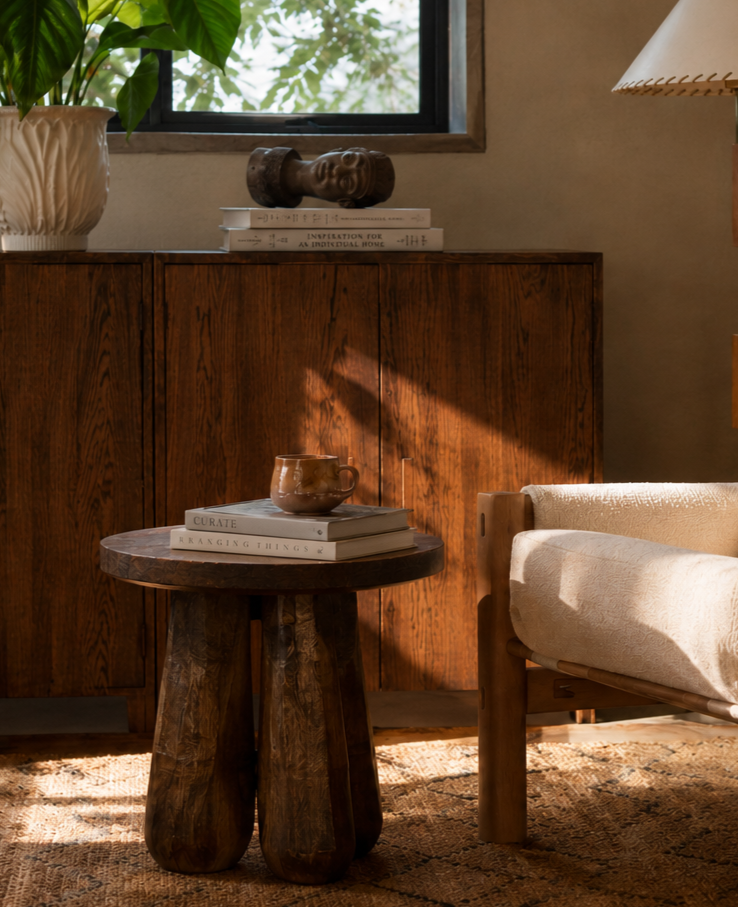
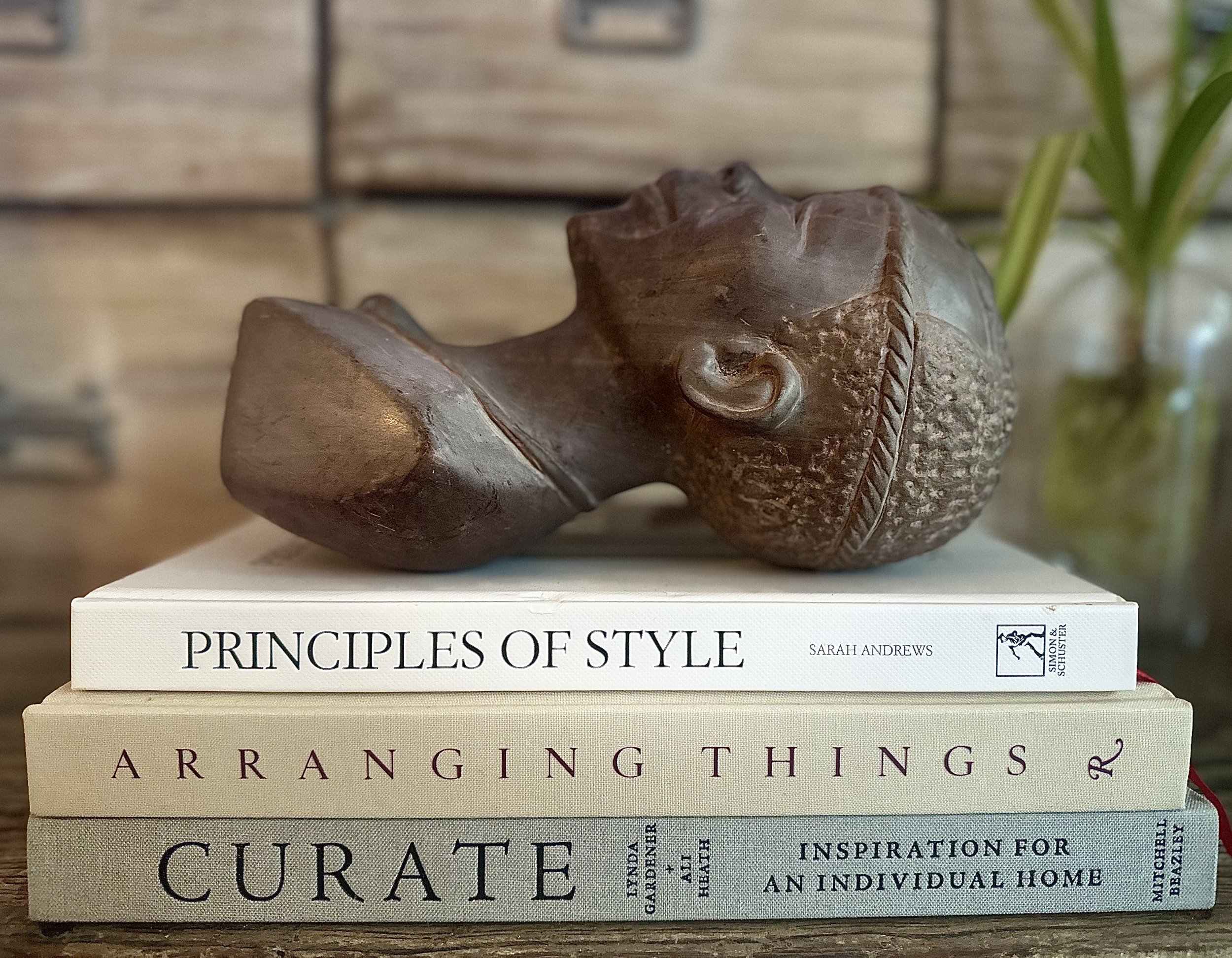
Design friends speak the same language: A hand-carved wooden stool plays a supporting role to the soapstone African statue sitting atop a stack of books. This pairing, along with the timber sideboard, continues a conversation between the individual items about age, patina, texture, and natural, organic materials in this quiet corner.
That’s exactly what creating a thread is all about.
What is Conscious Permanence in interior design?
Conscious Permanence, as Palmer frames it, is an approach to interior design that prioritises personal curation, emotional value, craftsmanship and longevity over fast-moving trends.
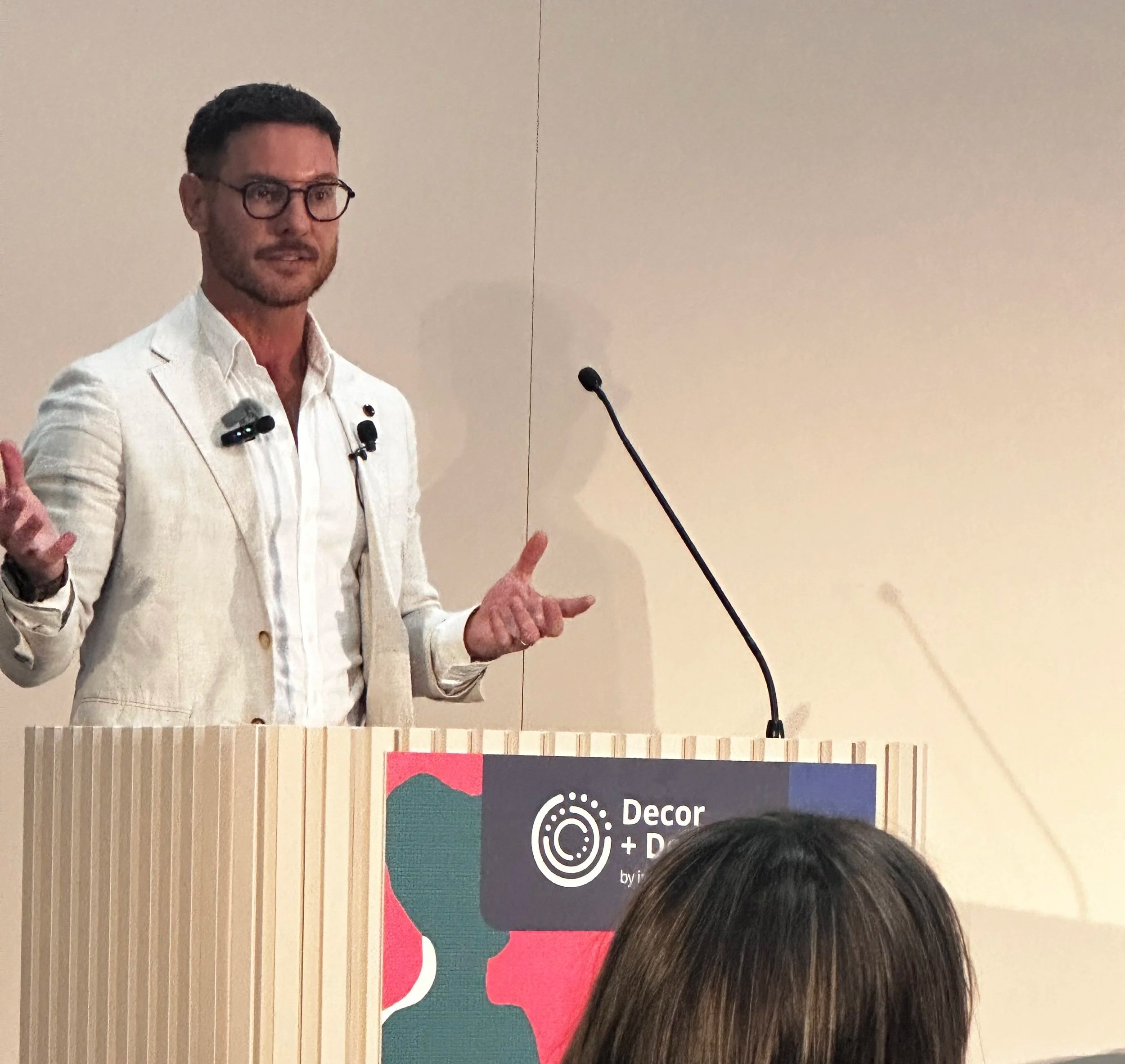
Darren Palmer Takes us to School, Decor + Design 2026 International Seminar Series:
He predicts “Conscious Permanence” is the next big design trend.
I couldn’t agree more ‘Professor Palmer’!
It means choosing fewer pieces more carefully. Looking for objects with provenance. Allowing a home to develop gradually rather than buying everything at once simply to make the room appear finished.
It also means asking more useful questions before bringing something home:
Who made it?
What is it made from?
Will it become more interesting with use?
Does it reflect something real about me?
Can I imagine it belonging in a different room — or a different home — years from now?
The most important question may be the simplest:
Will I still care about this when the trend has moved on?
Why do trend-led interiors date so quickly?
There is a particular kind of room that can be completed remarkably fast.
The sofa, rug, occasional chairs, coffee table and accessories are ordered within weeks of one another. Everything coordinates. The palette is familiar. Every object belongs to the same visual moment.
The room photographs well.
And yet, it can begin to feel flat almost as quickly as it was assembled.
The problem is not that any individual piece is badly made or unattractive. It's that the decisions were guided by recognition rather than connection. The owner has seen the look repeatedly, become comfortable with it, and reproduced it at home.
Once that look becomes overexposed, the emotional attachment disappears. The furniture may still function perfectly well, but the room already feels finished in the less useful sense of the word.
It has nowhere to go.
A trend-led room depends on the trend remaining desirable. A personal room has a deeper source of energy.
A Hand-Painted Sideboard From Northern China As Hero: This room’s Chelsea mirror and side table could have pushed the room towards the overly-trendy. The addition of the vintage one-of-a-kind sideboard from Marigold Interiors keeps it grounded, storied and unique to the client who lives there.
Is this the same as sustainable interior design?
The ideas overlap, but they aren't identical.
Sustainable interior design often focuses on environmental impact: responsible materials, lower waste, local production, ethical manufacturing, repair and reuse. These considerations matter enormously.
Designing for longevity adds another layer: emotional durability.
A piece can be well made and environmentally responsible, but still become disposable in the owner's mind if it was purchased only to follow a look. Likewise, an inexpensive object found years ago may remain deeply valuable because of where it came from, who gave it to you, or what it represents.
This is why longevity can't be measured by construction alone.
A dining table is more likely to stay in your life when it's both physically durable and emotionally significant. A chair is more likely to be reupholstered when you genuinely love its shape. A cabinet is more likely to move between homes when it holds a story as well as your belongings.
The most sustainable object is often the one you continue to value.
Permanence is not about buying the most expensive piece
This could easily be mistaken for an instruction to spend more.
It isn't.
A high price doesn't guarantee character, relevance or affection. You can spend a great deal on something selected for the wrong reasons, and very little on an object you'll never willingly part with.
Permanence begins with discernment.
It might mean investing in a beautifully made sofa because comfort, proportion and construction matter in a piece used every day. It might mean buying a vintage side table instead of a new one because the older piece has the shape and patina the room needs.
It may also mean buying nothing yet.
An empty corner is not a design emergency. Living without the perfect lamp for a few months is preferable to buying a placeholder you already expect to replace.
Less panic-buying. More point of view.
Why does provenance matter in a home?
Provenance is the story of where an object came from, who made it and how it arrived in your life.
The word is often associated with art, antiques and collectible design, but it matters just as much in an everyday room.
A woven basket from a local market may sit beside a contemporary Australian armchair. A Spanish ceramic plate may share a wall with a child's drawing. A vintage cabinet might hold books, travel finds and a new lamp chosen for its sculptural shape.
These objects don't need to come from the same country, decade or design movement.
They need a thread.
That thread might be colour, material, craftsmanship or form. More often, it's the eye of the person who collected them.
This is where a collected room differs from a cluttered one. Collected doesn't mean displaying everything you've ever owned. It means editing carefully enough for the pieces that remain to be noticed, used and appreciated.
Provenance gives a room depth because its contents aren't interchangeable. They came from somewhere. They mean something. Replacing them would change more than the styling.
Choose materials that can record a life
Some materials become more interesting through use.
Timber deepens in colour. Leather softens. Brass dulls and warms. Linen relaxes. Stone develops small marks that record the meals, conversations and ordinary routines happening around it.
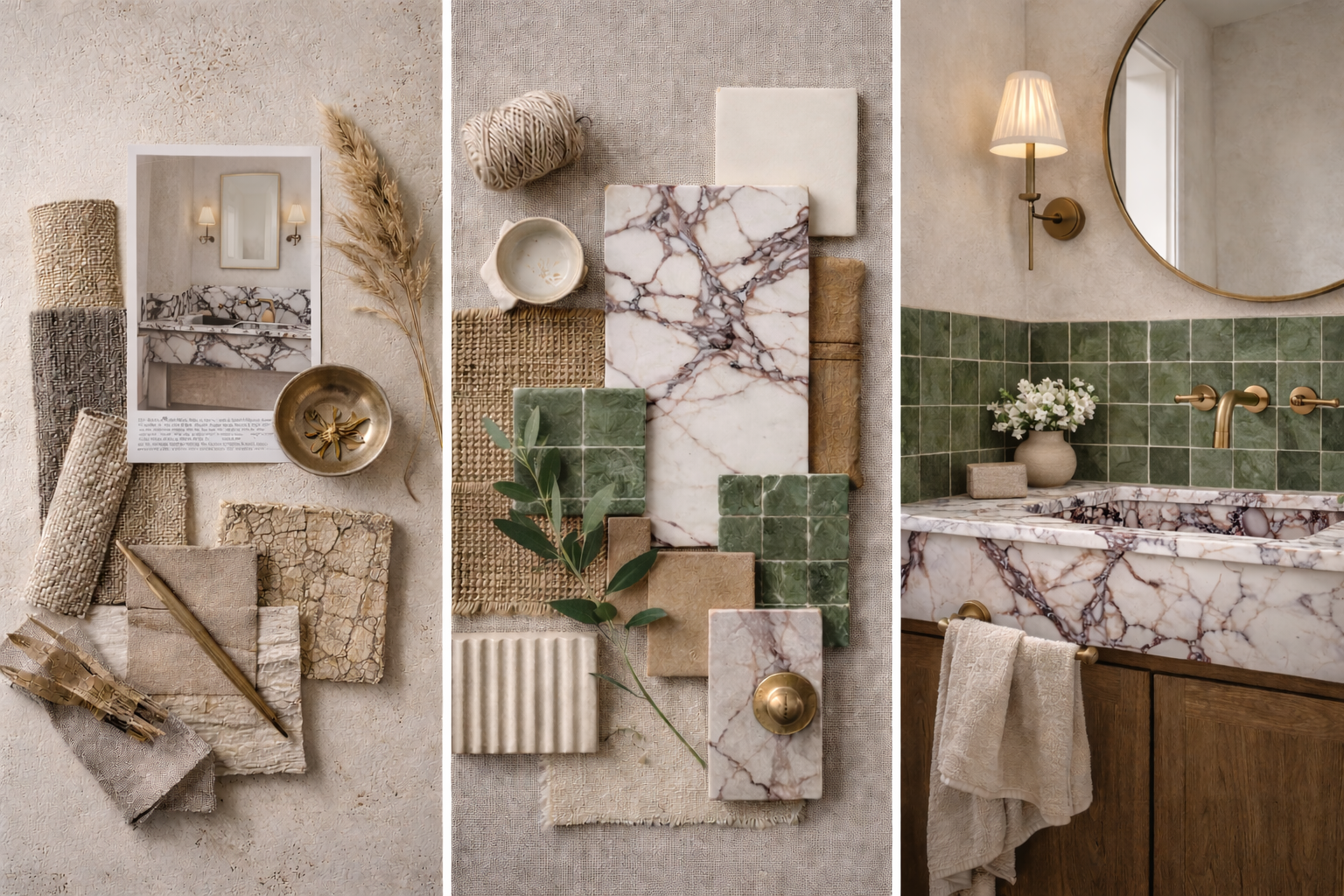
Materials That Remember: A time-worn linen hand towel, unlaquered brass hardware, hand-made Zellige tiles from Morocco, timber grain cabinetry, and the gravitas of Calacatta Viola marble all feel the fingerprints of the people who use them. That is a story that gets lost when materials are all man-made and technically engineered to resist marks and natural wear and tear from day-to-day.
These changes aren't necessarily flaws.
They're evidence.
We've become accustomed to finishes expected to remain visually untouched. A scratch is treated as failure. A variation in colour appears to require correction. But a home that can't tolerate the fact that people live in it becomes a tense place to inhabit.
Patina gives a room history.
It tells us the dining table has held hundreds of meals. That the chair by the window is the one everyone chooses. That the ceramic jug has been picked up, washed and returned to the same shelf for years.
A room that ages well doesn't remain frozen. It becomes richer as it's used.
What does a Grown-Up Globetrotter's home look like?
Clients with taste shaped by lived experience rather than trend forecasts are some of my favourite people to design for.
They may remember the soft light in a small hotel in Seville, the tiled walls of Lisbon, handwoven textiles in a market, or the worn stone beneath their feet in an old Mediterranean town.
They're not trying to recreate those places literally at home.
That would feel too themed.
Instead, those memories become part of their visual language. A preference for tactile materials, irregular ceramics, layered textiles, old timber, objects that reveal the hand of their maker.
Their travels become texture, not decoration.
A well-travelled home doesn't need to announce every place its owner has visited. It simply carries the depth of someone who has looked beyond a single showroom, catalogue or algorithm for inspiration.
This is why personal curation takes time. Taste built through experience can't be convincingly reproduced in one shopping trip.

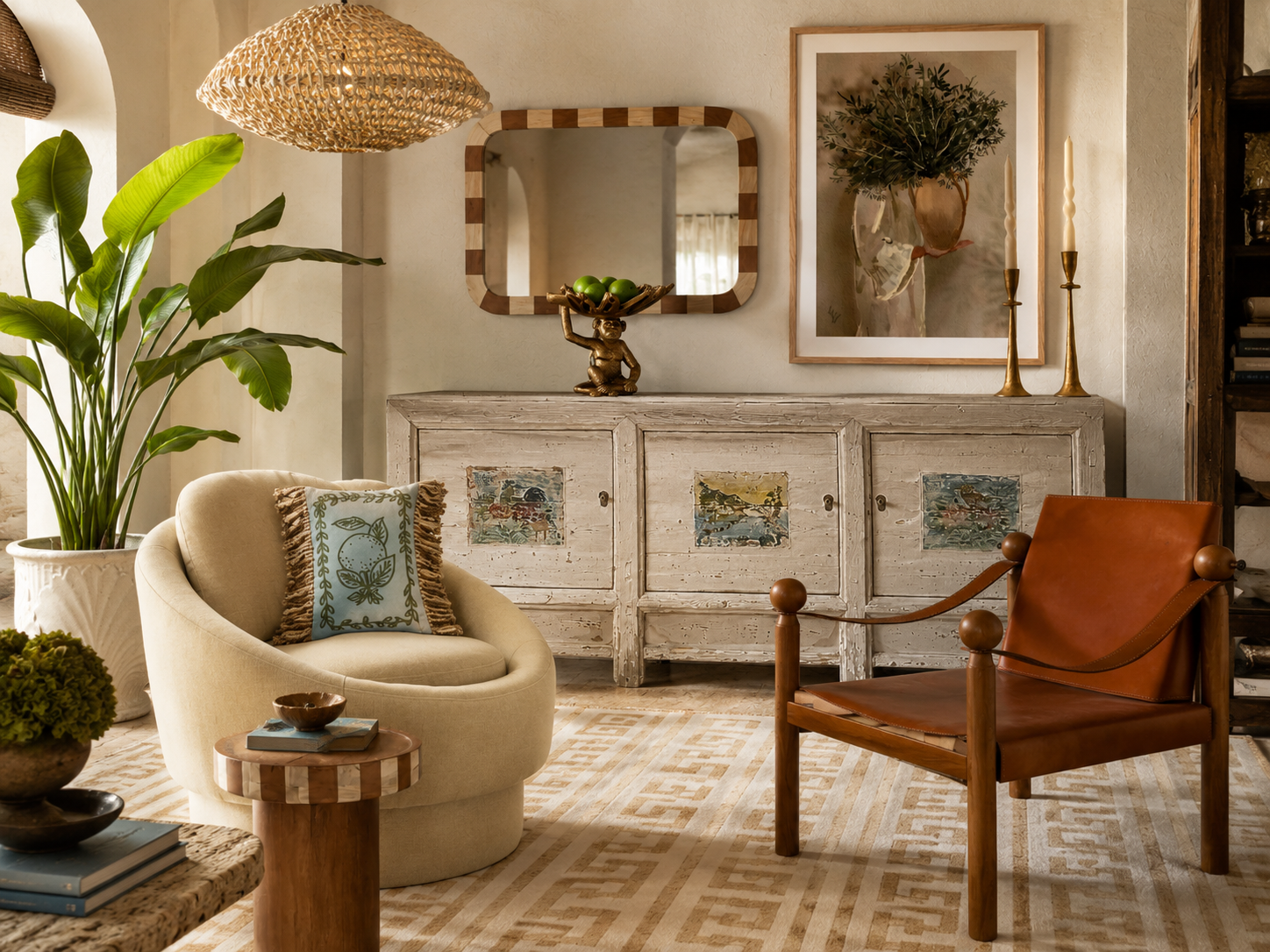
Living Room With A Hint of Rajasthan: An Indian Almirah from Marigold Interiors is the hero, supported sweetly by a curvy occasional chair and a pair of unique Indian hand-forged iron candlesticks.
Art credit: Support Your Girls by Brittany Ferns.
Start with one piece worth keeping
One practical way to reject throwaway interiors is to stop expecting every object to carry equal visual weight.
Good rooms often begin with one strong decision.
It might be a distinctive artwork, a deeply comfortable sofa in a rich colour, a hand-carved table, a vintage cabinet with an unusual silhouette (like the Indian Almirah in the mood board above), or a rug with enough presence to shape everything around it.
This is the hero piece.
It gives the room something to answer to. Once that anchor is established, the supporting choices can become quieter. You don't need endless accessories to manufacture personality because the room already has a point of view.
Without an anchor, people often buy a succession of pleasant pieces that never quite resolve into a room. Every item is agreeable. Nothing leads.
The fastest way to flatten a room is to make every choice a bit too polite.
One meaningful piece can do more for a room than ten forgettable ones.
Character first. Catalogue last.
A Room Built Around One Clear Hero: A statement artwork, a strong rug, a standout chair — with everything else visibly quieter around it creates a conversation between items where nobody is shouting and not a single piece is ignored.
Can a permanent interior still change?
Absolutely. Permanence should never mean rigidity.
Our homes change because we do.
Children arrive or leave. Careers shift. Relationships begin and end. People return from overseas, move into smaller homes, change cities, or realise the rooms around them still belong to an earlier chapter.
A forever piece isn't one that forces every future room to look the same. It's one capable of being reinterpreted.
A cabinet that once stored records may later hold linen. A bench may move from an entryway to the end of a bed. A dining chair may become a desk chair. An inherited piece may be repaired, refinished or reupholstered to suit the person you are now.
The best pieces can survive a change in context.
They hold memory without keeping you stuck.
That's why an interior designed for longevity needs both structure and breathing room. It should feel held together without being sealed shut. There must be space for another painting, another book, another object brought home from a place you haven't visited yet.
How do you create an interior that ages well?
Begin by noticing what already matters.
Look at the objects you instinctively protect when moving house. The chair nobody is allowed to throw away. The bowl you use every morning. The artwork that has survived three very different wall colours.
These pieces reveal more about your taste than a folder of saved trend images ever could.
Then consider the room around them.
What deserves to stay?
What's present only because it filled a gap?
Which materials will improve with use?
Where does the room need one stronger decision rather than several smaller purchases?
You don't need to solve the entire home at once. In fact, doing so can make it harder to distinguish genuine recognition from the temporary satisfaction of completion.
Leave room for the next chapter.
A home worth keeping
"Conscious Permanence" may be a new phrase in the wider design conversation, but the instinct behind it is deeply familiar.
A home should tell the truth about the person living in it. I want to work with objects chosen with care, made with skill, and kept because they keep earning their place — rooms that grow richer with use, not rooms that quietly go out of date.
Not every purchase needs to become an heirloom. Not every surface needs visible age. And no home has to remain unchanged to prove its contents were chosen well. I’m not even opposed to a good trend piece to add some punch.
The point is to move away from the belief that a successful interior must constantly mirror the moment.
Your home does not need to keep up.
It needs to belong to you.
That's the shift I keep coming back to: not a home preserved exactly as it is, but one with enough character, material depth and emotional value to keep evolving without losing its thread.

Warmth, Layering, and Pieces With Provenance: A primitive hand-carved coffee table, two beautifully crafted asymmetrical storage cabinets sit in contrast to the light oak chair and dark beige curved sofa. The cheeky monkey bowl injects whimsy and fun to the space, making this a place you’ll want to stop and stay a while.
Art credit: Woman At The Fruit Stand 1 by Brittany Ferns.
Is your home built one good room at a time, without anything tying it together yet?
The Atlas Experience — my multi-room e-design service — builds that thread across spaces that matter most. Explore The Atlas Experience to bring your favourite rooms into one considered whole, chosen for how it'll wear over time, not how it photographs this year.