

Round, Rectangular, or Oval: What Actually Decides Your Dining Table Shape
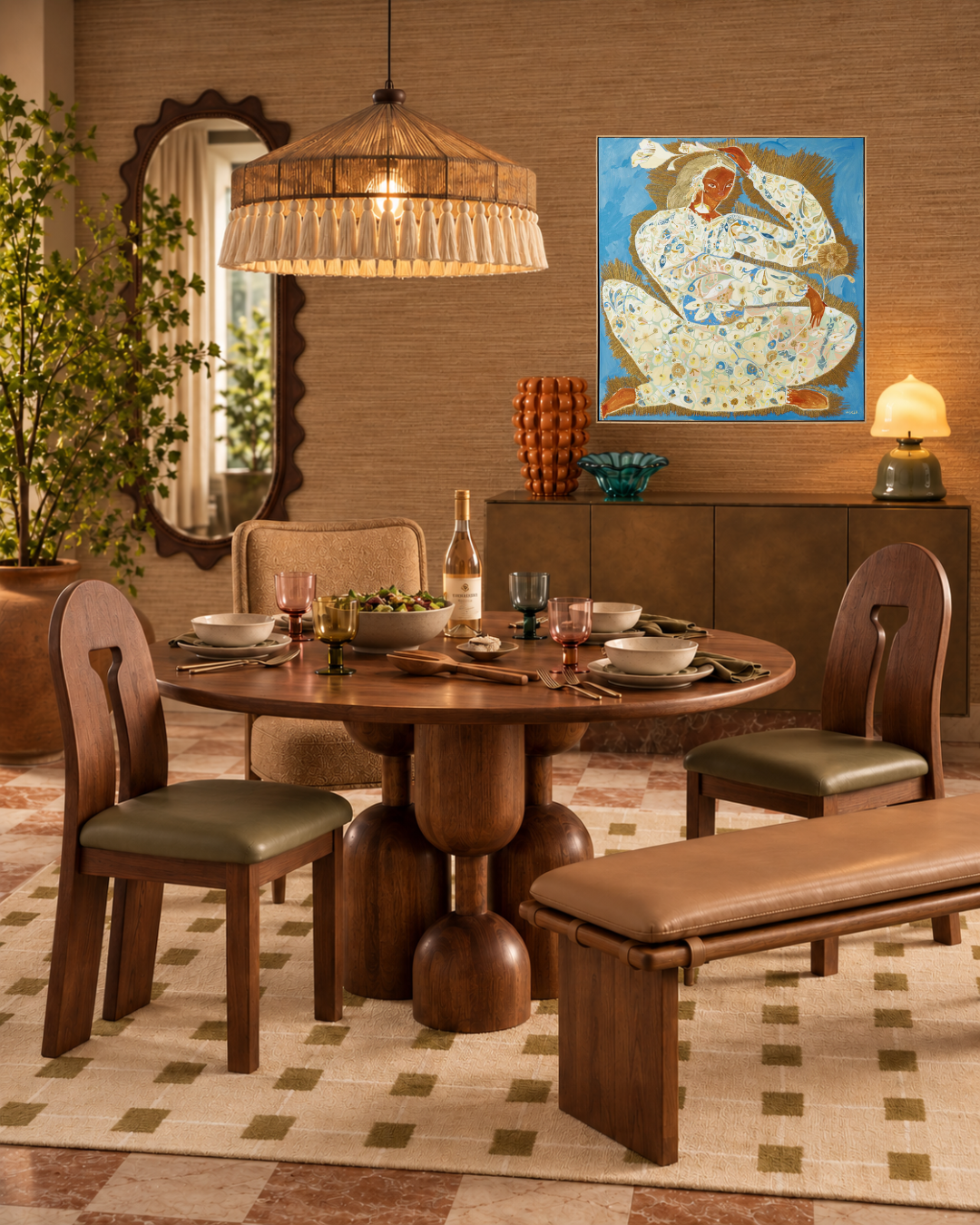
Warm, layered and lived-in, never highly staged. A characterful dining setting, featuring Nomi dining table (HORGANS) and Avan leather dining chairs (CASTLERY x Tan France collab).
Art credit: Maker of Light by Jai Vasicek.
There is no best dining table shape.
There is a best shape for what you need the table to do.
Round tables are recommended for conversation, rectangular for more seats, oval for softened corners with some of that length. All true — and beside the point the moment any of it becomes a rule.
Your dining table doesn't exist in isolation. It sits in a particular room, with particular proportions, and actual people pulling chairs in and out. It might host four people most nights and ten every second Sunday. It might spend Monday to Friday covered in a laptop and fabric samples before remembering it's supposed to be a dining table on Saturday night.
All of that matters more than whether someone has declared round tables "better." So if you're trying to work out how to choose a dining table shape, don't start with the shape. Start with what happens around it.
First, how many bodies are we actually talking about?
Not the maximum you could squeeze in with an assortment of stools and a great deal of goodwill — the number of people who genuinely need to sit comfortably.
At a normal four-to-six-seat scale, round tables have a lot going for them. Everyone can see each other, there's no head of the table, and without corners projecting into the room, circulation is easier too. For the right room, with the right number of people, lovely.
Then the numbers increase.
My sister is looking for a table around 270cm long — large family gatherings are just part of her life. That changes the question completely. Accommodate that many people around a round table and the diameter has to keep growing, until the people opposite each other are too far apart to talk to easily, which defeats the point of choosing round for conversation. For eight to ten people, most rooms end up somewhere between 220 and 270cm long, and rectangular is usually what gets you there without the table becoming absurdly deep.

Once the guest count grows, the shape question changes. A vintage dining table (ALABASTER TRADER) sits comfortably beside a more contemporary striped bench seat.
Oval can enter here too — keeping the length while losing the corners, which often eases movement around a substantial table. But it still has two ends. It isn't a round table in disguise, and it doesn't need to be.
The guest count has already told us something useful about the shape.
Then look at the room around the table
A table can fit beautifully on a floor plan and become deeply irritating the moment somebody sits down — chairs need to move back, people need to walk behind them, and someone always gets up just as another person carries something hot from the kitchen. This is where centimetres matter, and where treating a table purely as an object leads you astray.
A long room usually gives a rectangular or oval table somewhere to sit, following the direction of the space rather than pushing against it. A squarer room more often gives a round table the breathing room it needs. In an open-plan space the question changes again: maybe the table sits between the kitchen and living area, or there's a sideboard opposite that needs its doors opened without asking whoever's sitting behind you to move.
That's the stuff I want to know. Where do people walk? Where do chairs land once someone's actually sitting in them? Where does the room feel generous, and where does it pinch? Rooms work differently once bodies enter them. Design for that version.
What else does the table need to do?
This one's close to home, because I'm currently looking for a table myself — something that can replace a small work desk and also become a dining table. One piece, two jobs.
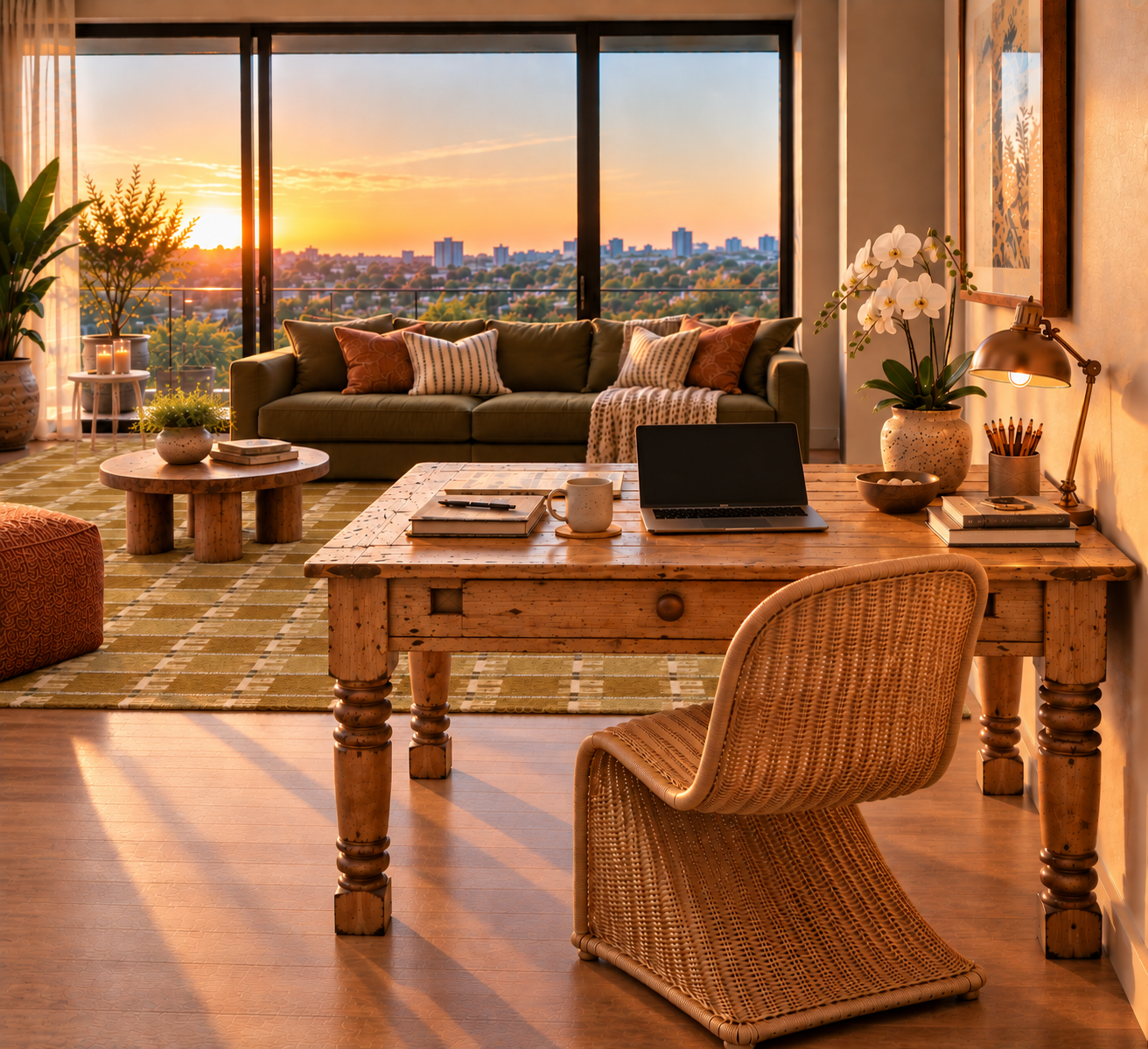
Double duty furniture can be your best friend. If the table has a second job, that belongs in the brief too.
This small scullery table is large enough to work at, plus it has a drawer for storage to pack the day away after hours and can quickly transform into dinner for four when the occasion calls.
That changes which shapes make sense. A round table would dine perfectly well, but not carry a laptop, notebook and samples for hours without everything drifting to the centre. I want a defined working edge and enough width to spread out — a table that behaves like a desk on weekdays and a dining table on Saturday night. Rectangular makes considerably more sense.
Notice what didn't happen there: I didn't decide rectangular was my preferred shape and build an argument around it. The second job made the decision clearer. Dining tables do an extraordinary amount of unpaid overtime in our homes — desks, homework stations, wrapping stations, Lego headquarters, somewhere to sit with a friend when dinner finished an hour ago. If yours has another job, put that job in the brief.
The order matters
When I'm thinking through how to choose a dining table shape, I work the questions in this order.
How many people need a seat? Start with everyday life, then the larger gatherings that happen often enough to matter.
What are the room's proportions? Not just the dimensions — doors, windows, kitchen benches, sideboards, and the natural direction of the room.
Where do people need to move? Pull the imaginary chairs out. Allow for actual bodies. Follow the route from the kitchen to the table, and the table to the garden.
Does the table have another job? If it's also your desk three days a week, say so now — the table doesn't care what the furniture category on the website said.
Then, and only then, choose the shape. None of the earlier observations should make the decision for you — they're clues. Your room does the rest.
Good rooms start with one strong decision. In this case, that decision might simply be refusing to buy the table until you know what you need it to do.
Because homes change
Life moves. The table you bought for two of you may now need to seat six. Perhaps the children have left and the table that once earned every centimetre of floor space now spends most of the week empty — or perhaps you've started hosting more.
The room hasn't failed. It's being asked a different question. Sometimes that means changing the table, moving it, extending it, losing a few chairs, or admitting the piece you loved in one chapter isn't earning its place in this one. A home should be allowed to keep up with the person living in it.
Which brings us back to the beginning: there is no best dining table shape. There is a best shape for the number of people around it, the room it sits in, and the work you need it to do. Start there. The answer tends to get a lot clearer.
If your dining space isn't quite working — or you're staring at three very different tables and wondering which one actually belongs in the room — that's exactly the kind of decision my E-Design services are built to solve. Not sure where to even start? Book a free Align & Define call and we'll figure out the shape of the problem before you buy anything.