

What I Actually Ask Before I Touch a Room
I've made a home in six countries.
Australia. England. New York. Gibraltar. Spain. Costa Rica.
Each move asked something different of me. Sometimes I arrived with furniture and familiar objects. Sometimes I had little more than a suitcase, a new address and the slightly disorienting feeling that my life had changed faster than my surroundings could catch up.
I learnt that making a room feel like yours has very little to do with identifying a style.
It has much more to do with recognising what you've carried with you.
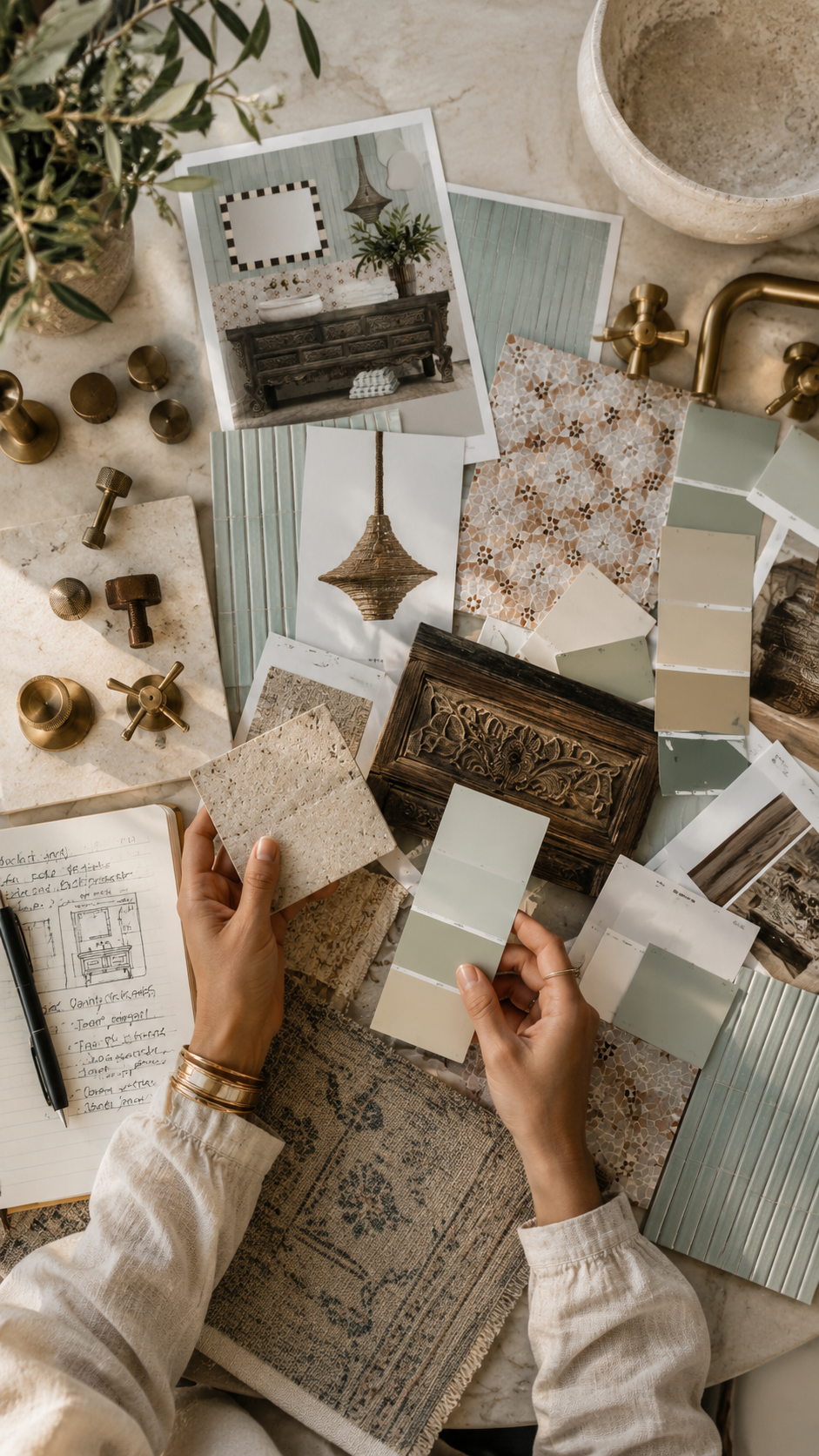
Materials Are The Mood
Tiles, mosaic patterns, natural stone. aged wood, patinated brass — alone they are all beautiful elements…but together, pure alchemy! They tell a story, evoke a mood, and create an atmosphere that is undeniably transportive and absolutely the gold we’re aiming for when creating a space. 💋
A particular quality of afternoon light. The sound of shutters opening. A bowl bought at a market and wrapped carefully through three house moves. The deep chair everyone gravitates towards. The view from a former kitchen. The rituals that make an unfamiliar place begin to feel like home.
These things stay with us. Often quietly.
They shape what we notice, what we miss and what we need from a room — even when we don't yet have the language to explain it.
That's why, before I touch a layout, choose a colour or start looking at furniture, I ask questions.
Not, "What's your style?"
At least, not first.
A biography tells me more than a style label
Most people can point to a room they like. Fewer can explain why they like it.
You might tell me you're drawn to Mediterranean interiors, boutique hotels, old European apartments or rooms that feel collected. That gives us somewhere to begin, but it isn't yet a useful design brief.
"Mediterranean" could mean chalky walls and sun-warmed stone. It could mean dark timber, hand-painted ceramics and a table built for ten. It could mean the blue of the water on the Costa Del Sol, the tiled courtyard of a house in Spain or the softened plaster of a place you stayed once and never forgot.
The label is broad. Your memory is specific.
That specificity is where the room begins.
My role as an interior designer in St Kilda isn't to assign you a category and build a convincing version of it. It's to find the thread between your experiences, your existing pieces, the way you live now and the atmosphere you want your home to hold.
Your biography is often a far better brief than your Pinterest board. A board full of beautiful rooms gives us a shared visual language — but I'm less interested in the surface of those images than in the repetition beneath them. Perhaps almost every room you've saved has low, generous seating. Old timber. Shelves crowded with books. The absence of ceiling lights. Nothing that appears brand new.
That's the useful information. We're not copying the room. We're finding the reason you saved it.

Palm Trees and Pura Vida!
My life in Costa Rica was simpler, slower, and honestly, pure joy. It taught me gratitude and perspective — lessons and friendships forged that I’ll carry with me forever. ❤️

Palm Trees and the Port
Life in Sotogrande Spain (and later Sabinillas, near Duquesa Port) was a dream, a chance to live amongst the sun-drenched terracotta hues of Spanish architecture.

Palm Trees and the Park
Albert Park Lake is a hop and a skip from my doorstep in St Kilda. The palm trees here and along the St Kilda Esplanade transport me to places I’ve lived and worked, and make me feel at home once again, like I belong.
Palm Trees - they seem to follow me wherever I live, whether that’s St Kilda near Albert Park Lake and the beachfront, Sotogrande or Sabinillas in southern Spain, or Escazu in Costa Rica. Yes, they signify “holidays” and coastal escapes from the everyday grind, but to me they also evoke feelings of freedom, exploration, adventure and a life overseas that stays with me always — the memories linger in my bones, and they’ve shaped who I am and how I want my own home to feel today.
"Where have you felt most at home?"
This is one of the most useful questions I can ask.
Notice I'm not asking which house was the most impressive, stylish or expensive. I'm asking where you felt most like yourself.
The answer might be your grandmother's kitchen. A small apartment you rented overseas. A weatherboard house where the windows were always open. A hotel room with low lighting, heavy curtains and somewhere proper to sit with a book.
Or perhaps you haven't felt completely at home anywhere for a while.
That answer gives me information no standard style questionnaire can. It tells me whether you associate home with openness or enclosure. Activity or retreat. Long meals or quiet mornings. Visual richness or the particular weight of a room that doesn't ask anything of you.
It begins to reveal what the room needs to do emotionally, not only functionally.
That matters because two people can save the same image for entirely different reasons. One sees the colour. The other sees the light.
"What has changed in your life?"
Rooms don't become wrong overnight. More often, life changes around them.
You return to Australia after years abroad and find that your belongings make sense individually but not together. The family home grows quieter after children leave. A separation means familiar furniture has arrived in an unfamiliar arrangement. A career shift changes how much time you spend at home. A move to St Kilda gives you beautiful light, high ceilings and absolutely no idea where the sofa should go.
The room may have suited a previous chapter perfectly. That doesn't mean it still has to.
I ask what has changed because design decisions made without that context tend to solve the visible problem and miss the real one. A new sofa won't fix a room that belongs to an old rhythm of life. Another cabinet won't create belonging after a move. A fresh colour won't help if the room is still organised around habits you no longer have.
This isn't about erasing the past. It's about deciding what still belongs and making space for the life you are actually living now.
"What are you keeping — even if it complicates things?"
This question often gets a slightly apologetic answer.
There's the inherited cabinet that feels too dark. The rug bought overseas that doesn't match anything. The art collected over twenty years. A chair that is not especially fashionable but is where the dog sleeps, the children climb or you drink your first coffee of the day.
Good. Those are not inconveniences to design around. They are evidence.
A meaningful room should not require you to discard everything that came before it. Sometimes the strongest starting point is the object that appears least cooperative. It gives the room something to answer to.
An old timber table can establish weight and warmth. A brightly patterned textile might determine the quieter tones around it. A collection of ceramics can inform scale, shelving and lighting. A piece inherited from family may need space around it so it feels intentional rather than stranded.
You do not necessarily need to start again. You may simply need a stronger thread.
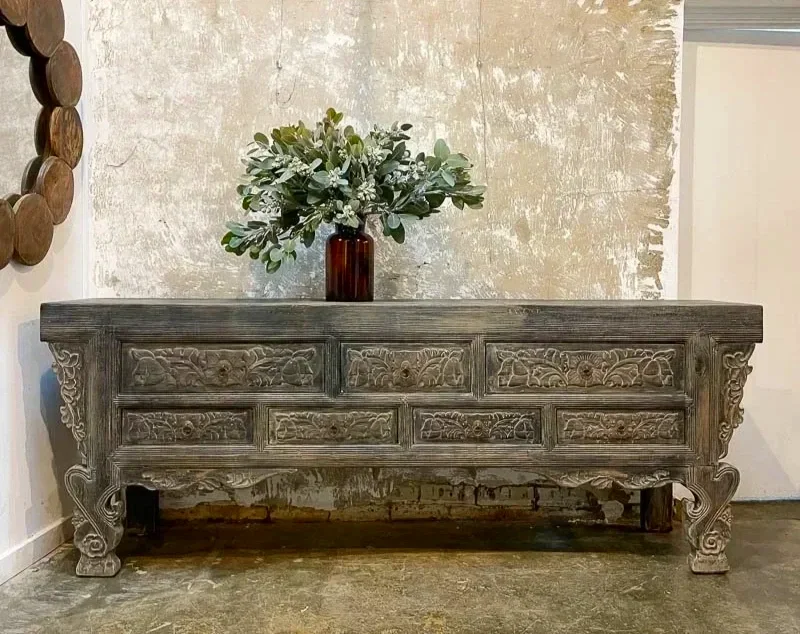
A Piece with History and Patina
Maybe it’s a legacy piece handed down from your grandparents, or perhaps something like this Shanxi Altar Table that you fell in love with at a local furniture showroom.
Whatever you want or need to keep, we can feature or design around it. I won’t ever ask you to throw it away!
Shanxi Altar Table Sourced: Marigold Interiors in St Kilda
"What do you want to do here that isn't happening now?"
This is where the conversation becomes practical.
Do you want friends to stay longer after dinner? Do you want to read in the room instead of scrolling somewhere else? Do you want to stop walking past a formal living room that nobody uses? Do you want a place for objects gathered through years of travel without turning the room into a display cabinet? Do you want to feel comfortable inviting people over?
These answers begin to shape layout, lighting, storage and furniture far more effectively than a list of preferred colours.
A room designed for long conversations needs different seating relationships from one designed around television. A space for morning coffee needs somewhere that catches the right light. A home for a collector needs editing, rhythm and negative space — otherwise the objects lose the very character that made them worth keeping.
Good design starts long before the cushions and the coffee table. It starts with what the room needs to make possible.
"What feels wrong, even if you can't explain why?"
Clients often know when a room isn't working. They just assume they need to diagnose it before they ask for help.
They don't.
You might say the room feels flat, awkward, unfinished or strangely impersonal. You might have good furniture, art you love and a perfectly sensible colour palette, yet still feel that something is missing.
That instinct is useful.
Sometimes the scale is too polite — everything similar in size, tone and visual weight, so nothing takes the lead. Sometimes the layout follows the walls rather than the way people move. Sometimes every piece was chosen individually and no decision is holding them together. Sometimes the room contains plenty of attractive things but very little of you.
I listen closely to the words clients use when they describe that discomfort. "Temporary." "Generic." "Heavy." "Not mine." "Still like a rental." "Too much, but somehow not enough."
Those words point us towards the real design problem.
The answer is rarely to buy more.
Annoying, I know.
"What do you never want this room to become?"
Preference is useful. Resistance can be even more revealing.
You may not know exactly what you want, but you know you don't want a room that feels staged, precious or beige by default. You don't want your travels turned into a theme. You don't want every object hidden away. You don't want to feel as though you live in a showroom where moving a cushion would cause an incident.
These boundaries help me understand your appetite for contrast, pattern, age, imperfection and personality. They also protect us from creating a room that photographs well but asks you to behave like someone else.
A home should have enough structure to hold together and enough looseness to be lived in. Wet towels happen. Books accumulate. Friends bring wine. Someone puts their feet on the chair.
The room needs to survive all of it. Preferably with character intact.
What a real brief might sound like
Imagine someone who has recently returned to Melbourne after living overseas.
They have a woven rug from one country, ceramics from another, a comfortable sofa they don't want to replace and several boxes of art that have never been hung together. Their new living room has lovely proportions but feels strangely anonymous.
A style-led brief might describe their Pinterest board as "eclectic Mediterranean." That tells me almost nothing.
A biography-led brief sounds different: they want the room to hold the richness of the places they've lived without becoming themed. They want their existing pieces to feel connected rather than scattered. They want to host again — long meals, rooms that improve as the evening goes on. They need better lighting, a stronger furniture arrangement and permission to use colour with more confidence.
Now we have something to design from.
The rug establishes the tonal direction. The art creates rhythm across one long wall. A more substantial coffee table gives the room the weight it currently lacks. Layered lighting changes how the space feels after sunset. New upholstery introduces pattern without asking every object to compete.
Nothing is copied. Nothing is arbitrary. The room grows from the person who lives there.
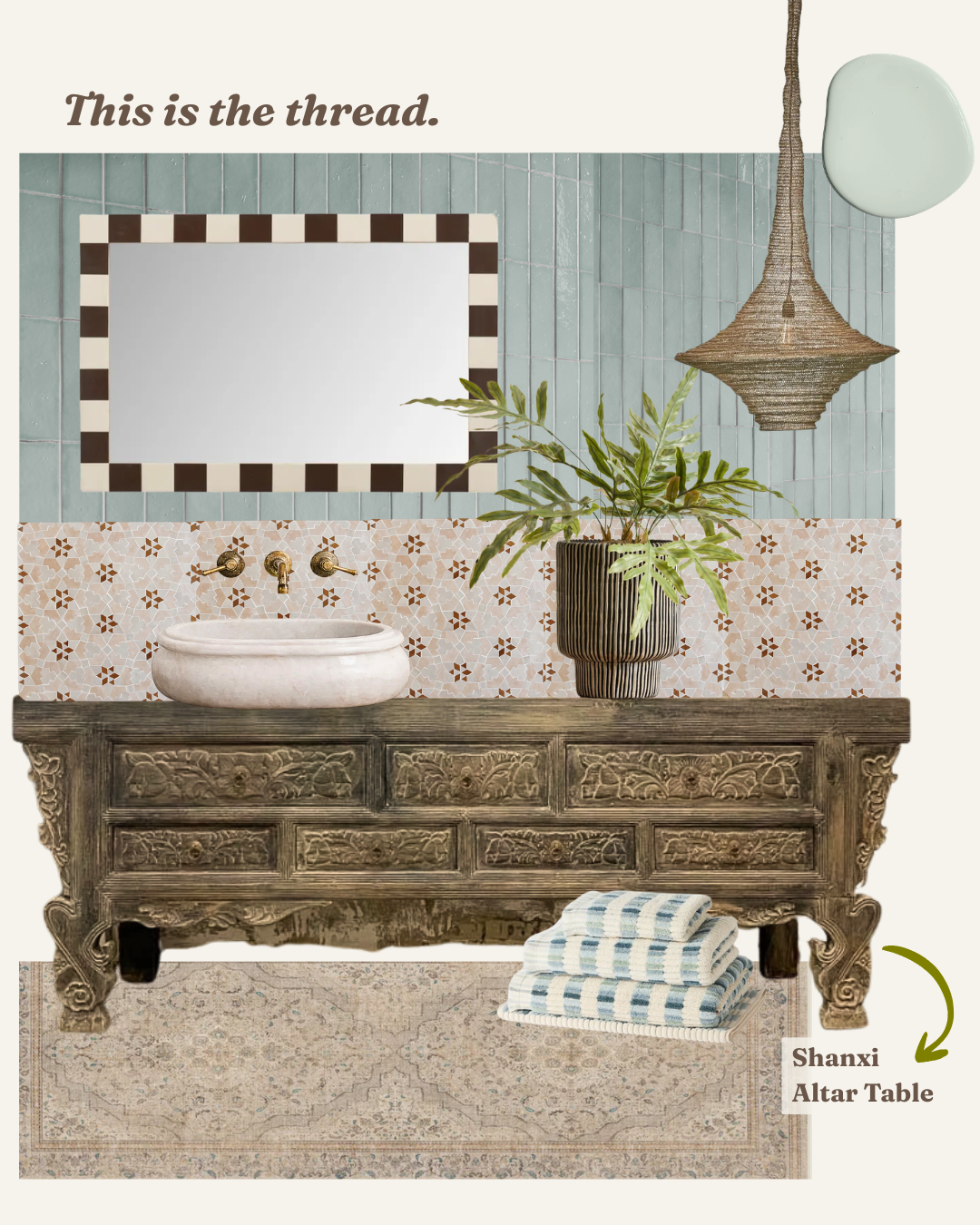
An Ensuite, But Make it Anything But Builder Grade!
An Ensuite doesn’t have to be basic or boring. Here, we enlist character, age and patina by reimagining this five-drawer Shanxi Altar Table as a an eye-catching vanity!
Shanxi Altar Table Sourced - Marigold Interiors in St Kilda.
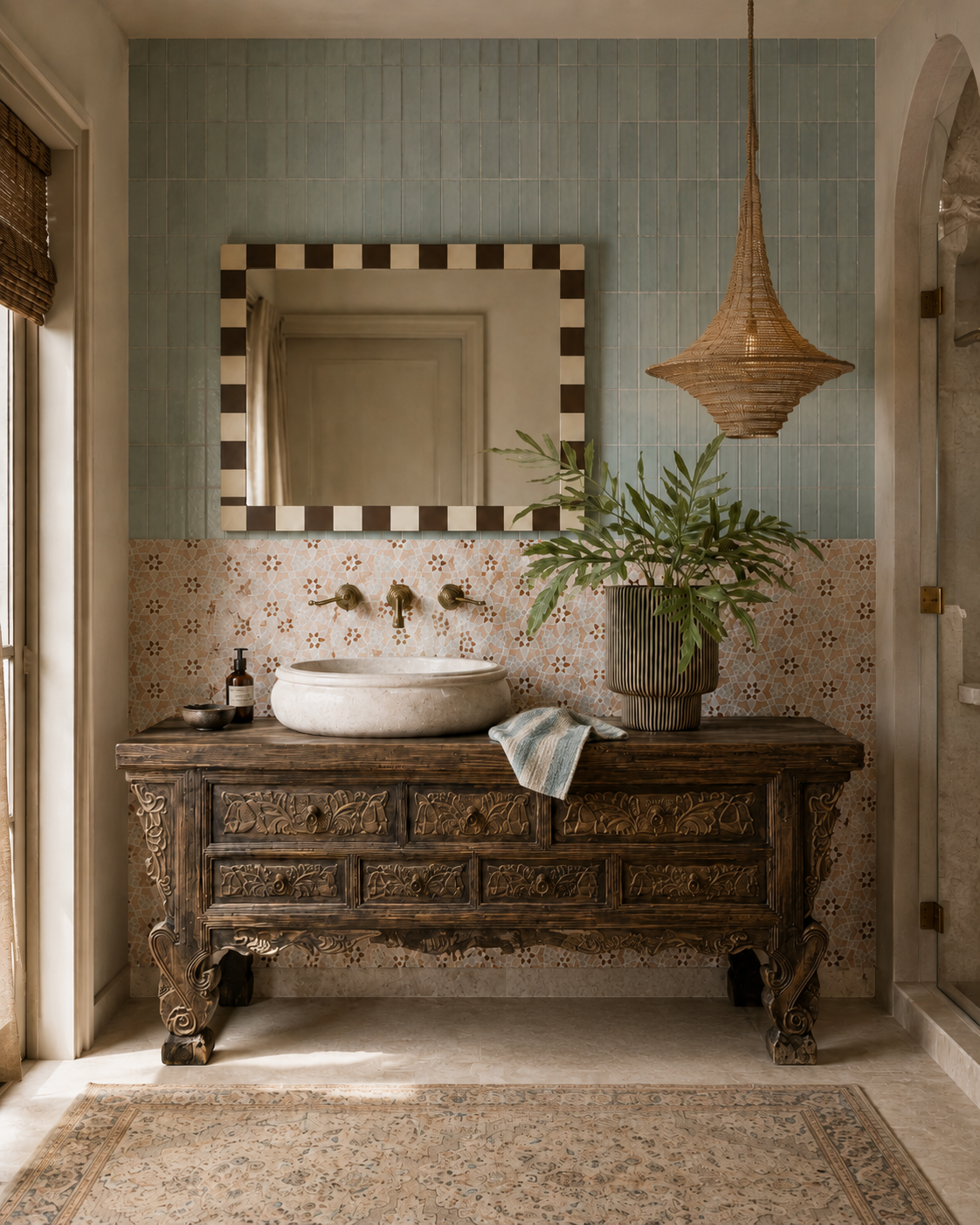
From Mood Board to Mockup.
Let’s see what the mood board might look when we bring it to life. This render will give the client a better visualisation of what to expect when we gather all the elements of the mood board together in a room. Decisions become easier, and that’s always what we’re aiming for.
Before I touch the room, I listen for the thread
Measurements matter. So do budget, access, lead times, pets, children, ceiling heights and the position of every inconvenient power point.
But those details are not the whole brief.
Before any of them become a design plan, I want to know what your home has been holding, what has changed and what you want the room to make possible next.
Because the most personal interiors are rarely created by choosing a style and applying it consistently. They are built by noticing.
What you've kept. What you miss. What no longer fits. What still matters. And the small rituals that make a room feel unmistakably yours.
If you want to work through these questions for your own room, the Align + Define call is where we start.