

The room that holds you: why a finished room can still feel flat — and what changes when it finally doesn't
Some rooms are beautiful in the way a hotel lobby is beautiful.
Considered. Expensive-looking. Perfectly pleasant.
And still, you would not curl up there with a book, serve pasta at the table, or leave your shoes by the door without feeling as though you had disturbed the set.
That is the quiet problem I encounter most often working as an interior designer in Melbourne and online across Australia. Rooms that look right before they feel right. Rooms that are finished — technically — but flat.
Nothing is obviously wrong. The furniture may be good. The palette may be tasteful. The styling may be doing exactly what styling is meant to do.
But the room does not hold the life being lived inside it.
This is where many people get stuck. They assume the problem must be practical. The sofa is wrong. The rug is too small. The artwork needs replacing. The room needs more colour, less colour, better lighting, a different coffee table, a second chair, another weekend spent scrolling and second-guessing.
Sometimes those things are true.
But often, the deeper issue is not that the room is unfinished. It is that the room is finished, but flat.
It has all the expected pieces, but no emotional pull. No depth. No real reason to stay.
In other words, the room has no soul.
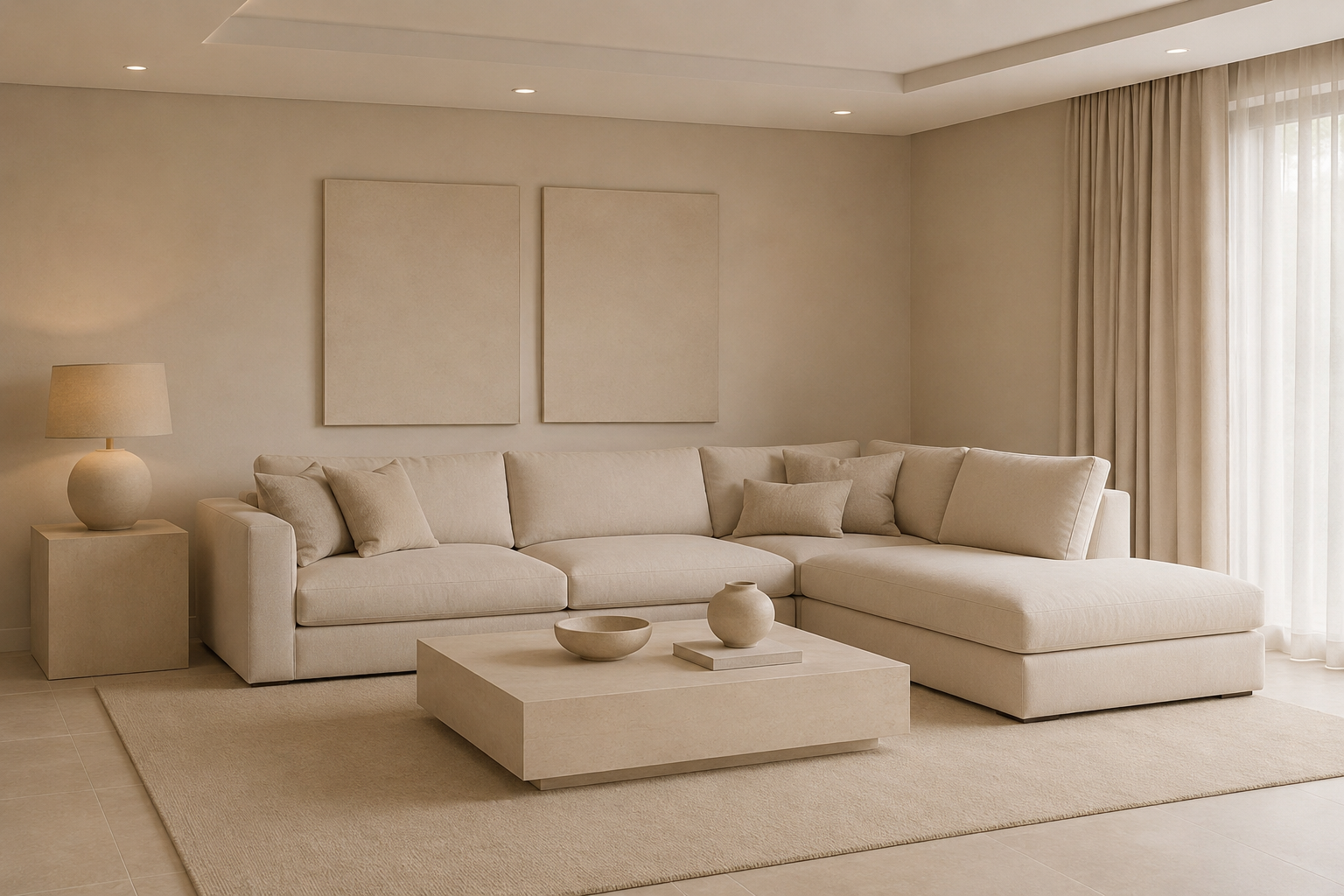
A room can be tasteful and still feel like it belongs to no one.
A finished room can still have no soul
A finished room means the major pieces are in place.
There is somewhere to sit. Something underfoot. Something on the walls. A lamp. A side table. Possibly a bowl nobody is allowed to put keys in.
The room functions. Technically.
A decorated room goes one step further. It has been softened, styled, arranged, and made more presentable. The cushions have been chosen. The objects have been placed. The colours may even relate to one another in a polite, mutually agreeable sort of way.
But soul is different.
A soulful room is not simply filled with beautiful things. It has emotional weight. It has a point of view. It feels as though the person living there is somehow present in the room, even before they walk into it.
Not because everything is autobiographical. Not because every object needs a story or the mantelpiece needs to carry the weight of a life well lived.
A room with soul is more subtle than that. It has a thread — something that leads, and everything else knows how to respond. It might be a material, a colour, a piece of art. A timber table with enough age in it to make every shiny new thing nearby look slightly nervous. A certain quality of afternoon light that the whole room seems to be arranging itself around.
The point is not that everything matches. Matching is often where rooms go to lose their pulse.
The point is that everything belongs to the same conversation.
A soulful room has hierarchy. It knows what matters most and what is there to support it. That is why two rooms can contain the same amount of furniture and feel completely different.
One feels assembled.
The other feels inhabited.
One asks you to admire it.
The other lets you live in it.

The difference between assembled and inhabited.
The anchor: the one decision that gives a room depth
Most flat rooms are missing an anchor.
Not a theme. Not a trend. Not a label you could type into Pinterest and watch 400 nearly identical rooms appear.
An anchor.
The anchor is the thing the room is answering to. It gives the space its point of view.
It might be an object you already own. A rug from a trip. A painting you bought before you had a wall for it. A ceramic lamp with a slightly odd shape and the exact right amount of personality. A cabinet that has followed you through three homes because you cannot quite imagine letting it go.
It may also be less tangible.
A feeling of shade and retreat. A memory of a small hotel in Lisbon. The washed-out colours of summer linen. The burnished warmth of old timber. The way a particular room needs to feel at the end of the day when everyone has finally stopped asking you where things are.
The anchor matters because it changes the brief.
Without an anchor, every decision happens in isolation.
Do we like this sofa? Is this cushion nice? Would this artwork work? Is this colour too much? Should the lamp be taller? Do we need something in that corner?
The room becomes a series of unrelated negotiations.
With an anchor, the question becomes clearer.
Does this support the room we are making?
That one shift saves a lot of money, a lot of mistakes, and a lot of almost-right purchases that sit in the room for years quietly bothering you.
It is especially important in layered interiors, where the aim is not to strip away personality but to give it structure. Collected pieces, travel finds, books, textiles, inherited furniture, art, and everyday objects can bring richness to a room. But without a clear thread, layered can become cluttered. Characterful can become chaotic. Personal can start to feel visually noisy.
The anchor gives the layers somewhere to gather.
It lets the room have depth without losing direction.

Caption: One strong decision that everything else answers to.
Artwork Credit: Support your Girls by Brittany Ferns. @brittany.ferns on Instagram
Emotional alignment is not the same as aesthetic taste
Good taste is useful.
It helps you recognise beauty. It sharpens your eye. It allows you to choose the better lamp, the more interesting textile, the chair with stronger proportions.
But good taste does not guarantee a room that feels like you.
That is the bit people often find maddening.
They can see what works in other people's homes. They know when something is cheap-looking, badly scaled, or too obviously copied from a catalogue. They are not starting from nowhere. In fact, they may have very strong instincts.
And still, their own room refuses to carry the feeling they are after.
That is because taste answers one question: what do I like?
Emotional alignment asks a deeper one: what does this room need to hold?
It might need to hold a new chapter after a long period of compromise. It might need to hold a version of family life that has changed. It might need to hold someone who has lived overseas and come back with a more layered sense of home than their current rooms can carry.
It might need to hold a renter who is tired of living as though this place does not count.
It might need to hold a person with beautiful objects and no idea how to make them speak to one another without turning the room into a museum of their own good taste.
Aesthetic taste can tell you whether something is attractive.
Emotional alignment tells you whether it belongs.
That distinction is small, but it changes everything.
A room can be full of attractive things and still feel emotionally blank. It can be tasteful and still impersonal. It can photograph well and still feel oddly unwelcoming at five o'clock on a Tuesday when real life walks in carrying groceries, shoes, mail, and a slightly bad mood.
Emotionally aligned interiors are not about turning your life into a theme.
They are about making the room honest enough to recognise you.
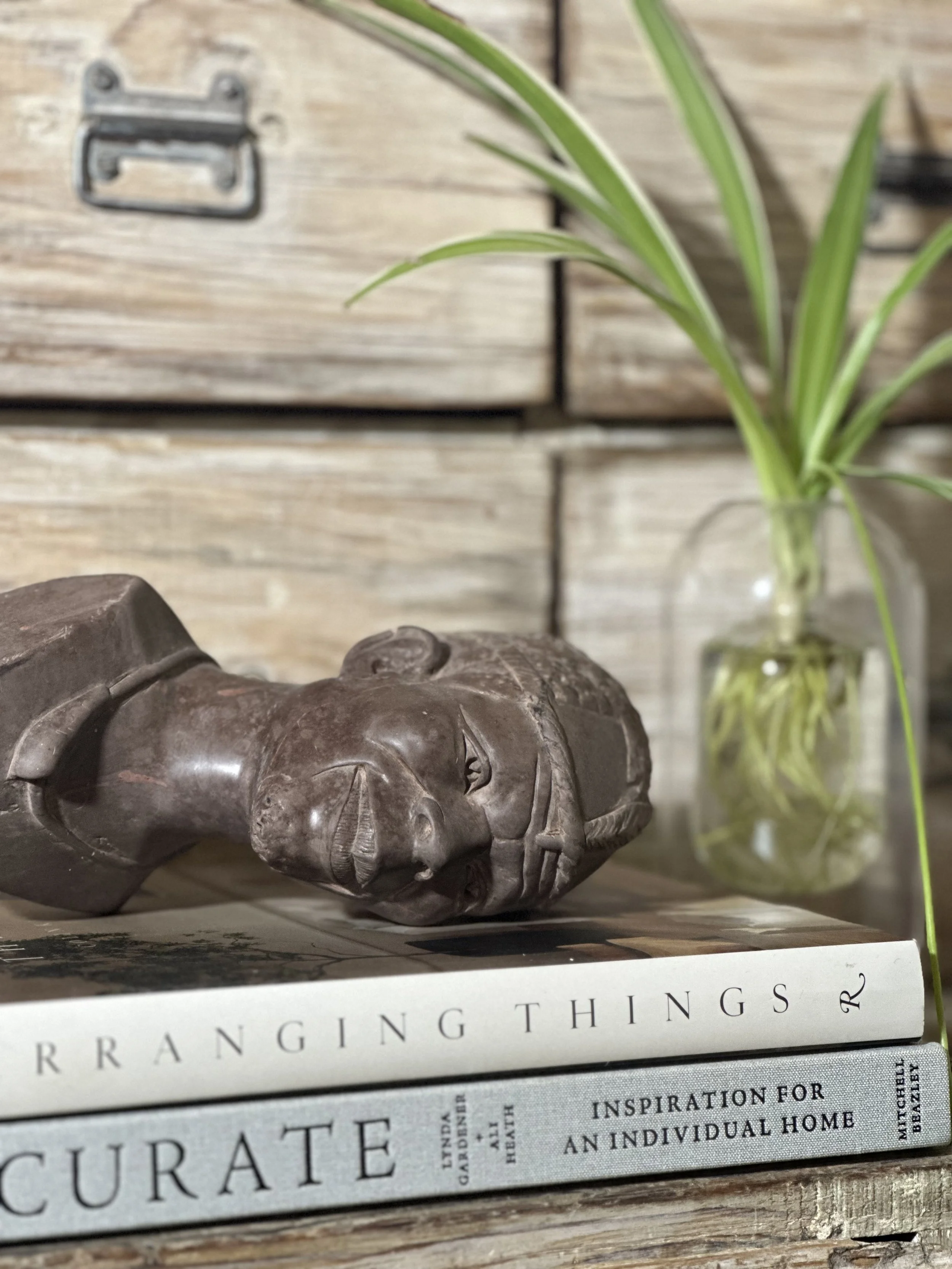
Taste tells you what you like. Emotional alignment tells you what belongs.
How to make a room feel like you
The question of how to make a room feel like you is usually not solved by buying more.
It is solved by deciding more clearly.
Start with the room that bothers you most. Not the whole house. The one room you keep circling back to. The one you apologise for. The one you have almost fixed several times, where every new purchase seems to help for about ten minutes before the old dissatisfaction returns.
Then stop adding and start looking. What is already trying to lead?
There is usually something — a piece you would be genuinely sad to lose, a colour that keeps appearing without you consciously choosing it, a material that feels more grounded than everything around it. Sometimes it is less obvious than that. Sometimes it is the part of the room you keep fighting that is actually the beginning of the answer.
Sometimes the anchor is already there. It is just being drowned out.
A beautiful old timber table surrounded by pieces that are too sleek. A richly patterned rug weakened by furniture that refuses to pick up its rhythm. A piece of art hung in a room that has not taken its palette seriously. A reading chair with so much personality that everything else in the corner feels slightly apologetic by comparison.
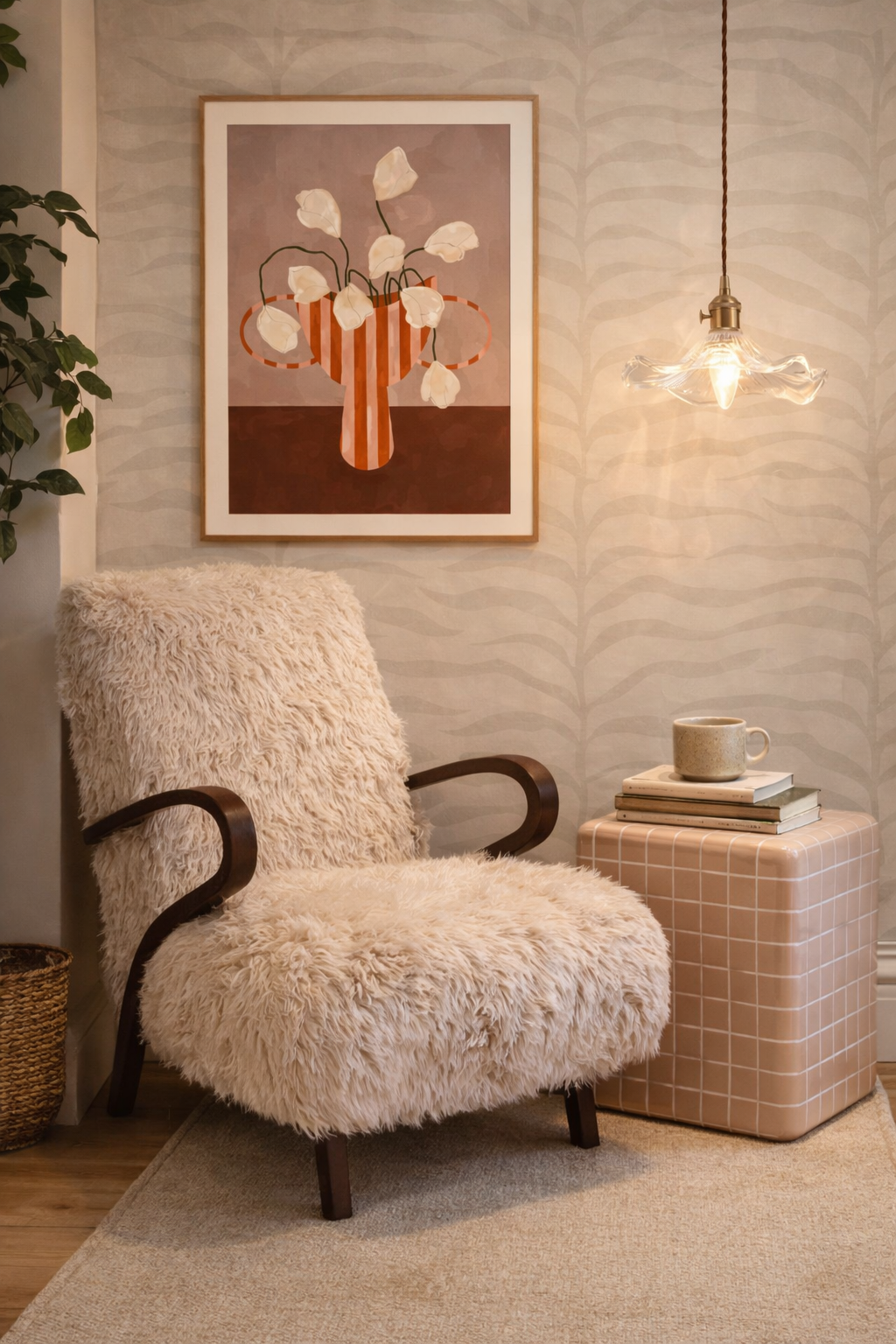
The chair is the reason you stay. One extraordinary piece is sometimes all a corner needs.
Once you identify the strongest thread, you can begin to edit around it.
That might mean removing pieces rather than adding them. It might mean warming up the palette. It might mean choosing one bolder textile instead of five timid accents. It might mean changing the layout so the room actually supports the way you live, not the way the floor plan vaguely suggested you should live.
This is the less glamorous part of design, but it is often the most important.
A room begins to feel like you when it stops trying to be generally pleasing and starts becoming specifically yours.
Not over-explained. Not themed or decorated within an inch of its life.
Just clear.
Why flat rooms are so tiring
There is a particular kind of low-grade irritation that comes from living with a flat room.
It is not dramatic. You do not necessarily hate the space. You may not even mention it unless someone asks.
But you feel it.
You hesitate before inviting people over. You keep buying small things in the hope one of them will magically pull the room together. You avoid sitting in the chair that looked good online but somehow feels wrong in the corner. You tell yourself it is fine because nothing is technically broken.
That is the problem with rooms that have no soul. They rarely announce themselves as emergencies.
They just quietly drain the pleasure out of being home.
And because the room is not obviously terrible, it can be hard to justify doing something about it. Especially when there are other practical demands, other priorities, other reasons to leave it for now.
But fine is a very thin thing to live inside.
A home does not need to be perfect. It does not need to be finished in one grand sweep. It does not need to impress strangers on the internet.
But the rooms you use every day should not make you feel vaguely disconnected from your own life.
That is not asking too much.
Online interior design Australia: one room with a stronger thread
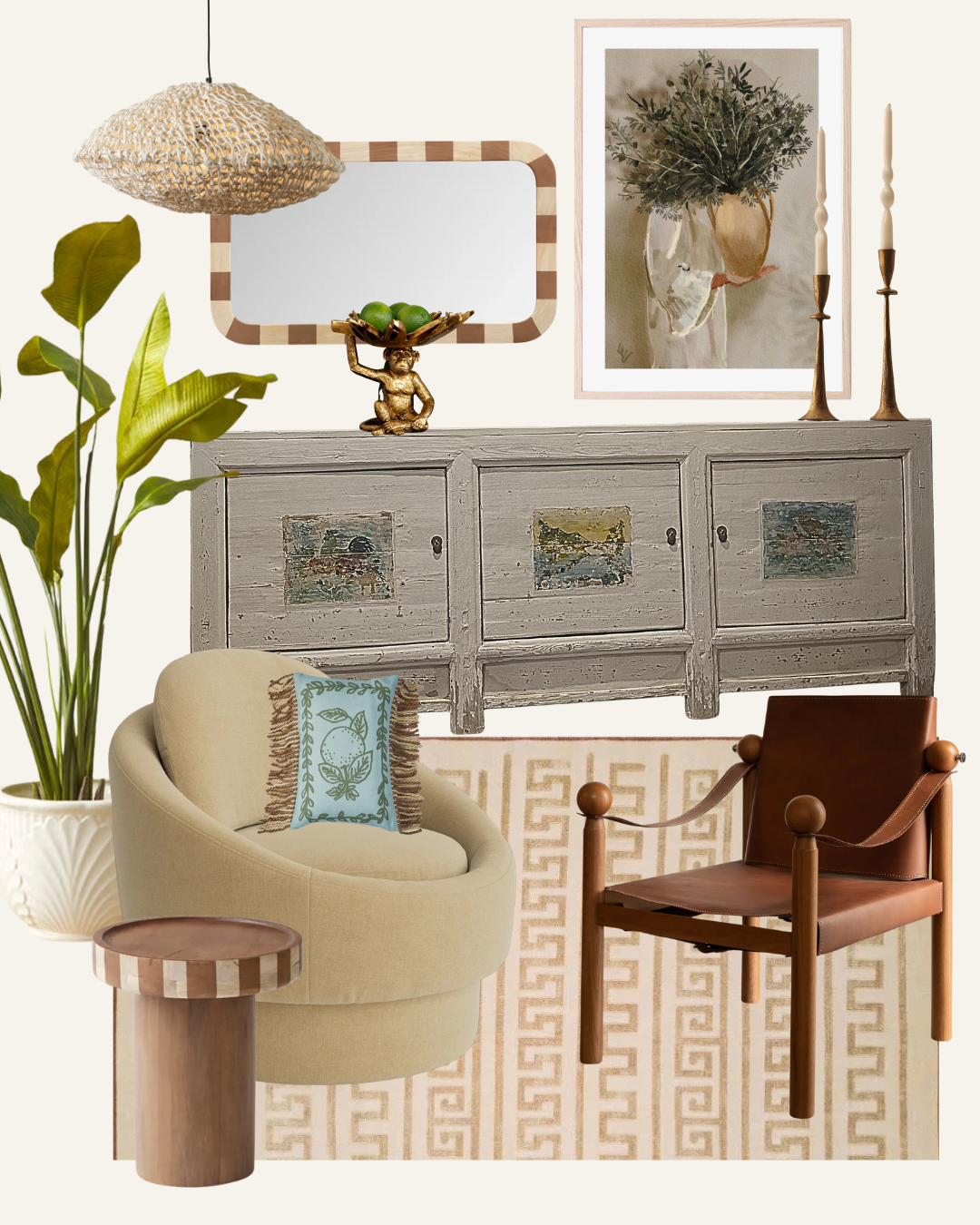
The Passport Plan — one room, fully reimagined. From $895. E-Design Australia-wide.
This is exactly what The Passport Plan was created for.
One room. Fully reimagined. From $895. E-design Australia-wide.
It is for the room that has good pieces but no thread. The room that is almost there but still feels flat. The room that does not need a complete personality transplant — just a clearer point of view.
Through The Passport Plan, we start by finding the anchor. The thing the room should answer to. From there, the design direction becomes more precise: a mood board, sourced pieces, a layout plan, and styling notes that show you not just what to buy, but why it belongs.
That distinction matters.
Because online interior design in Australia should not be reduced to a shopping list and a nice-looking PDF. Done properly, e-design can still be personal, layered, and deeply specific. It can still read the emotional brief of a room. It can still help you understand what to keep, what to change, and what has been missing.
For clients looking for interior design in Melbourne, The Passport Plan offers a focused way to give one room a stronger thread before tackling the whole house. For clients elsewhere in Australia, it brings the same Studio Halo & Fitz process online — without losing the warmth, clarity, or attention to story.
One room is often enough to change how the whole home feels.
Not because everything has been solved.
Because something finally has weight.
The room that holds you
The most expensive room is not always the one that stays with you.
Neither is the most fashionable one.
It is usually the room with the clearest sense of itself. The room where the old piece and the new piece have found a way to speak. The room where the palette has stopped drifting. The room where the objects are not performing personality, but carrying it quietly.
A room that holds you does not need to be perfect.
It needs soul.
It needs an anchor, a thread, and enough honesty to reflect the life being lived inside it.
That is emotional alignment in design. Not softness without structure. Not sentiment instead of skill. Not a vague feeling layered over a pretty room.
It is what happens when the practical, visual, and personal parts of a room finally start answering to the same decision.
And when that happens, the room stops feeling like a set. It starts feeling like home.
If you're not sure whether your room has a thread yet, the Thread Test is a free way to find out — before we ever need to talk.
Take the Thread Test