


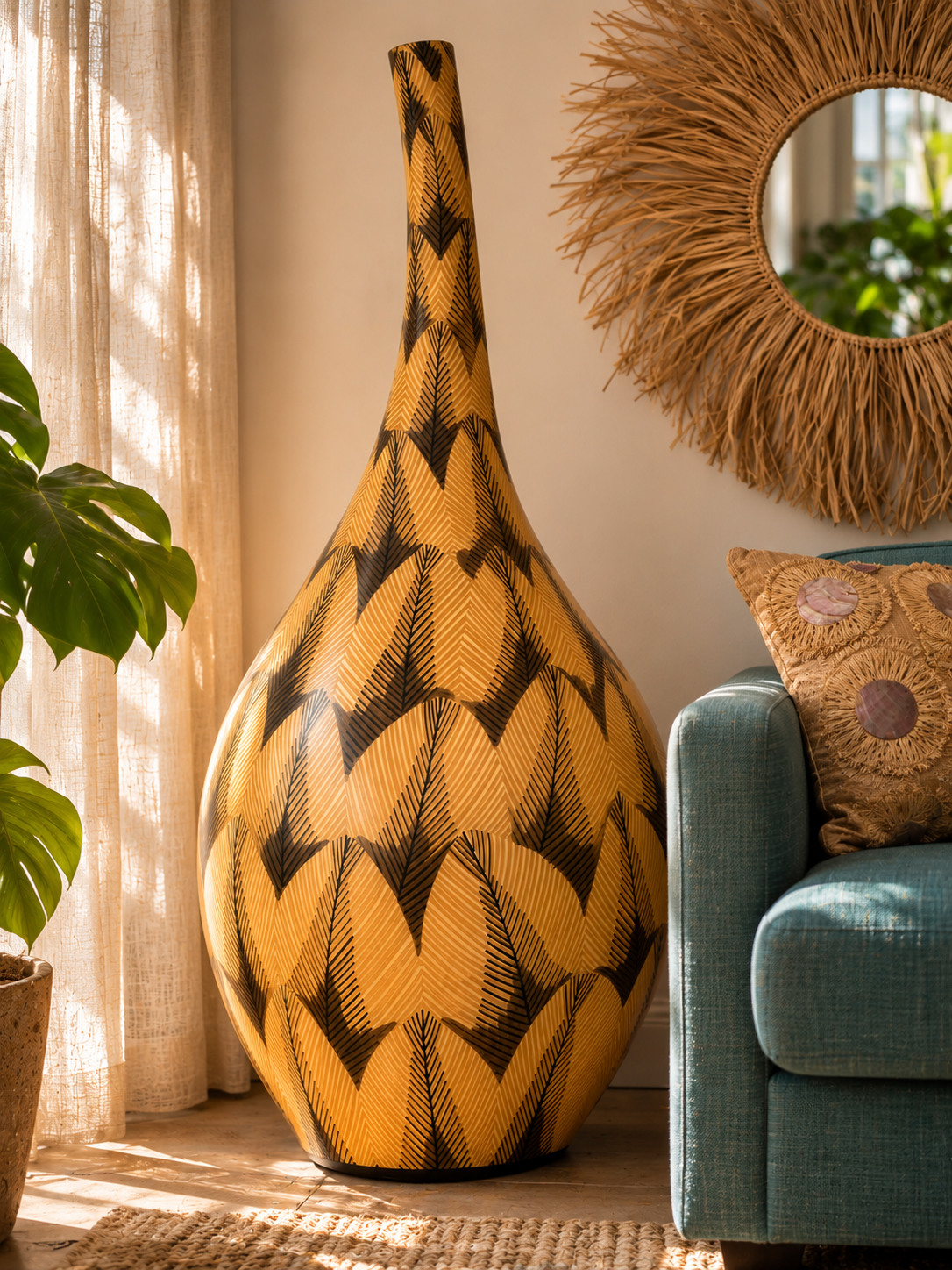
A characterful, layered living room concept with a strong anchor piece, interesting textures, artwork with personality, and a sense that the objects have been collected over time.
~ Concept render by Studio Halo & Fitz.
There’s a particular kind of overwhelm that comes with looking around your home and realising every room needs something.
The sofa has seen better days. The bedroom still has that bare wall you’ve been meaning to address. The hallway has quietly become a storage facility for shoes, bags and everything nobody knows where to put.
If you’re wondering where to start redecorating a whole house, start with decisions before purchases. Find the thread that connects the rooms, settle what the trades will touch, then begin in the room that sets the direction for the rest.
Most people start with whichever room is irritating them most. Fair enough. Until the new living room rug has absolutely nothing to say to the hallway paint, and the beautiful chair you bought in March feels like it belongs in a different house by June.
Good design starts long before the cushions and the coffee table. And when you’re working across several rooms, the order you make your decisions matters just as much as the decisions themselves.
What should I decide before buying anything for the house?
Start by finding the thread that connects the rooms.
A home becomes more interesting when each room has its own personality while still feeling part of the same story.
That thread might be a recurring material, a particular warmth in the timber, an earthy colour that appears in different strengths, or the contrast between something beautifully worn and something more refined.
Look at what keeps drawing you back. The objects you wouldn’t part with. The rooms you’ve loved being in, whether they were yours or somewhere you stayed for a week.
There’s usually a connection.
Once you’ve found it, you have a point of view to make the next decision against.
Start with the pieces you love
I learnt something about this when I lived in Costa Rica.
My rental came furnished, so I wasn’t particularly concerned with decorating an entire house. I simply bought a handful of pieces I loved and worked them around what was already there.
Two brass-inlaid side tables, imported from Morocco of all places, and a beautiful organic floor lamp from Habitat Muebles were among them.
I loved them enough to ship them back to Australia, where they lived happily in my Melbourne apartment for years.
Last year, when I began rethinking the space, I realised the side tables no longer belonged in the room I was creating. They found a new home with a Melbourne CBD Airbnb owner furnishing a bohemian, eclectic apartment.
The lamp is still mine, although it’s currently in storage. Beautiful as it is, its generous proportions demand more floor space than I can give it right now.
The things we love don’t always stay in the same place, or with us forever. A home evolves, and sometimes good design means knowing what to keep, what to let go of, and what deserves to wait for another room.
What comes first: the rooms or the trades?
Before you commit to furniture, look at the decisions that are hardest to undo.
Layout, lighting, power points, flooring and paint all affect one another, so look at them together even if the work is spread over months.
Lighting is a particularly good example.
You can spend a considerable amount on beautiful furniture and still find the room doesn’t feel right at night. Often, the problem is overhead lighting doing a job it was never designed to do alone.
Think about how each room is used, where you need task lighting, where a softer pool of light would work better, and whether your power points are actually in useful places. Plan the lighting across the house early, even if you tackle the installation in stages.
The same goes for flooring and finishes. Decisions made in isolation have a habit of meeting awkwardly at doorways.
Better to discover that on paper.
Which room should I redecorate first?
Once the overall direction is established, look at the room with the strongest influence on the rest of the house.
Often, that’s the main living area or a hallway connecting several spaces. Somewhere you can see into or through other rooms, where the relationship between colours and materials becomes particularly noticeable.
This is a good place to establish your anchor piece.
An anchor is the object that gives a room its point of view. A substantial vintage cabinet, a beautifully patterned rug, an artwork with a particular colour story. Something with enough character to guide the decisions around it.
The other rooms pick up the conversation in their own voice.
From there, consider how you actually live.
If you spend every evening in the living room, that’s probably a more useful priority than a formal dining room you use four times a year.
If your bedroom doesn’t support the way you want to begin and end your day, it might deserve attention first. Our bedrooms often get left to last, but they shouldn’t be last on the list for an upgrade just because most people never see it except ourselves.
And the guest bedroom?
It can wait its turn.
The order should serve the people living in the house.
How do I redecorate a whole house when I can’t buy everything at once?
Here’s where having a plan really earns its keep.
You can make the big design decisions before you’re ready to make every purchase. Establish the direction for the house, identify the pieces worth keeping, work out what needs replacing, and decide which purchases have the greatest influence on everything else.
Then give yourself permission to do it in stages.
Perhaps the first stage is lighting and paint. The second is the living room furniture. The bedrooms follow when the budget allows.
Some pieces might take months to find. That’s fine. I’d rather see a space live with an empty corner for a while than fill it with something that was merely available on a Tuesday.
A home furnished over eighteen months can feel just as considered and custom as one completed in eight weeks. Sometimes more so, because you’ve had time to understand what the rooms actually need.
What matters is that the decisions are connected, even when the purchases are months apart.
So, where do you begin?
You can begin before you have every answer. Start with a clear enough direction to know which decision comes next, and which can wait.
Look at what you already have. Pay attention to the rooms that work and the ones that don’t. Find the pieces that deserve to stay, and begin building a thread around them.
The whole house doesn’t have to be solved in one weekend.
And you certainly don’t need to buy another cushion to feel as though you’ve made progress.
If you’d like a considered eye on your home before you start spending, book a free 20-minute Align + Define call to talk through where it makes sense to begin.
Frequently asked questions
Should I redecorate one room at a time or the whole house at once?
I’d plan the direction for the whole house first, then carry out the work in manageable stages. Decisions about materials, lighting and the relationship between rooms are easier to settle together. Furniture purchases and installation can follow in whichever order suits your household, priorities and budget.
Which room should I redecorate first?
Start with the room that has the greatest influence on the rest of the house, or the one causing the most frustration in your daily life. A main living area is often a useful starting point, but there isn’t one correct answer. The important thing is that the first room establishes a direction the others can build upon.
How long does it take to redecorate a whole house?
That depends on the scope of work, the number of trades involved, furniture lead times and your budget. A furnishing-led refresh may move relatively quickly, while changes involving lighting, flooring or layouts require more planning and coordination. A whole-house plan allows the work to happen in stages without losing sight of the overall design.
What is the difference between E-Design and full-service interior design?
E-Design gives you a professionally developed design plan to implement yourself, making it a practical option for clients across Australia who are comfortable managing their own purchasing and installation.
The Grand Tour is Studio Halo & Fitz’s more hands-on, full-scope design service for projects across Melbourne’s inner suburbs and inner bayside.
The right approach depends on the complexity of the work and how involved you’d like to be in bringing the design to life.
What happens on an Align + Define call?
It’s a free 20-minute conversation about your home, what’s working, what isn’t, and what you’re hoping to achieve. We’ll discuss the scope of your project, your priorities and the level of design support that makes sense, including whether we’re aligned on budget and expectations.