

One Room Shift — The Stories Your Entryway Tells
Your entryway is more than a pass-through. It sets the mood, the pace, and the emotional tone of the home from the very first step inside.
Not in words, obviously, but in mood, in light, and in whatever is waiting for you the second the door opens. A warm pool of lamp light on a timber console says one thing. A pile of shoes, nowhere to put your keys, and a bulb bright enough to interrogate someone says another.
That first moment matters more than people often realise. It is where the outside world ends, where your shoulders either begin to drop or stay slightly up by your ears, and where your home starts telling the truth about how it feels to live there. Warm or flat. Collected or forgettable. Welcoming or unresolved.
For a space that is so often overlooked, the entryway carries remarkable emotional weight.
And yet it is frequently treated like an afterthought. A leftover strip by the front door. A place for accidental clutter and joyless practicality. Keys get dumped, bags slump into corners, and shoes gather in a way that makes the whole space feel faintly defeated. Nothing disastrous, exactly. Just a quiet little dead zone that drains the energy before the house has had a chance to say anything better.
That is why a small shift here can change so much.
An entryway does not need to be dramatic. It needs to feel deliberate.
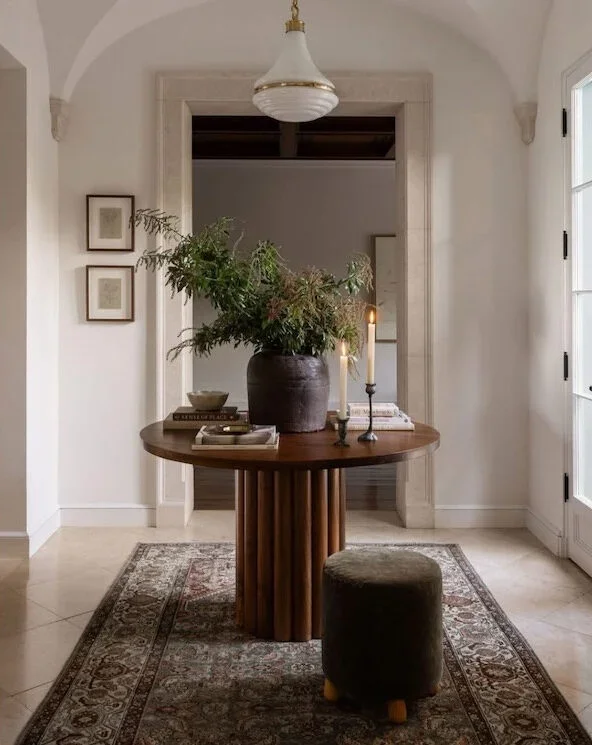
Instead of the usual rectangular console table pushed against a wall, this foyer table centred in the entrance sets a stylish tone for what’s to come in the rest of the home.
If you have the space, a similar setup could be the magic your home needs.
Design by Amber Lewis.
The first impression is not just for guests
People often talk about entryways as though they only matter when somebody comes over. In reality, the person most affected by your entryway is you.
You are the one walking through the door with your head full of errands, emails, noise, and the general nonsense of being alive. You are the one being met by whatever mood the space gives back. If the entry feels harsh, cluttered, dim in the wrong way, or completely devoid of personality, it creates a low-grade friction that is easy to dismiss but surprisingly persistent. The house begins on the wrong foot.
A good entryway does the opposite. It steadies the landing. It offers some immediate sense of warmth, identity, and care. It signals that you are back somewhere that holds you properly.
That shift matters more than most people think.
What an entryway needs to do
A well-designed entryway is doing a few things at once. It needs to absorb the practical spill of daily life without looking like it has given up. It needs to set the emotional temperature of the home. And it needs to reveal something about the person living there.
That does not require a grand foyer, custom cabinetry, or some aggressively styled console moment with six identical objects lined up like they are waiting for inspection. It requires judgement.
Usually, that looks like a place for keys that does not become a graveyard of receipts, a grounding piece of furniture with enough presence to stop the area feeling temporary, better light, and one or two details with warmth, memory, or character. The goal is not to over-style the space. It is to make it feel resolved.
Five ways to make an entryway feel better
Give the daily clutter somewhere to go
Most entryways do not feel chaotic because they hold too much. They feel chaotic because they hold things badly.
Keys end up on the nearest ledge, sunglasses disappear under unopened post, bags slump to the floor, and shoes start breeding by the door. You do not need a miracle to fix that. You need containment.
A tray, bowl, drawer, hook, or basket is not revolutionary, but it changes the rhythm of the space immediately. Instead of everything landing everywhere, the entry starts functioning with a little more grace and a lot less visual static.
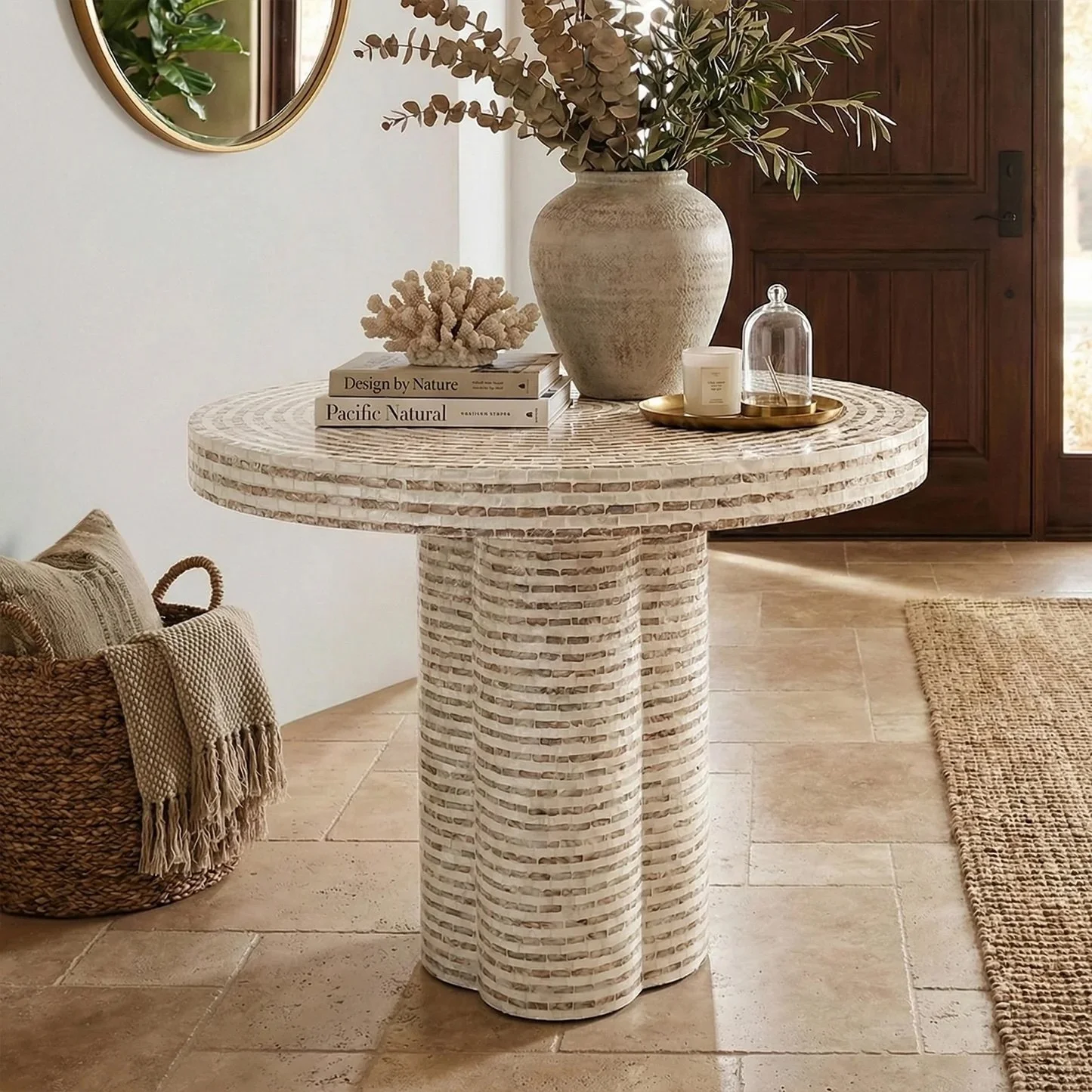
Neutral doesn’t have to feel like bland.
This entryway takes the Amber Lewis idea (above) and moves it from warm classic into Global Resort territory. The table’s Mother of Pearl sheen, together with the matt ceramic pot and the sculptural coral work harmoniously alongside the woven basket and contents to create a lively, yet soft and welcoming arrival.
The brass tray can easily become a catch-all for keys and sunglasses instead of a candle holder.
Roux Round Mother of Pearl Console - Luxo Living
Add one piece with presence
This is often the shift that makes an entry stop feeling like leftover floor space and start feeling like part of the home.
A narrow console in aged timber, a pedestal table with a beautiful shape, or a bench that gives the wall some weight can all do the job. Even a vintage stool with a bit of history to it can be enough. The piece does not need to be large, but it does need to hold its own.
Flat-pack filler has a way of making an entry feel even more temporary. A piece with character changes the message entirely. It tells the eye that someone made a decision here.
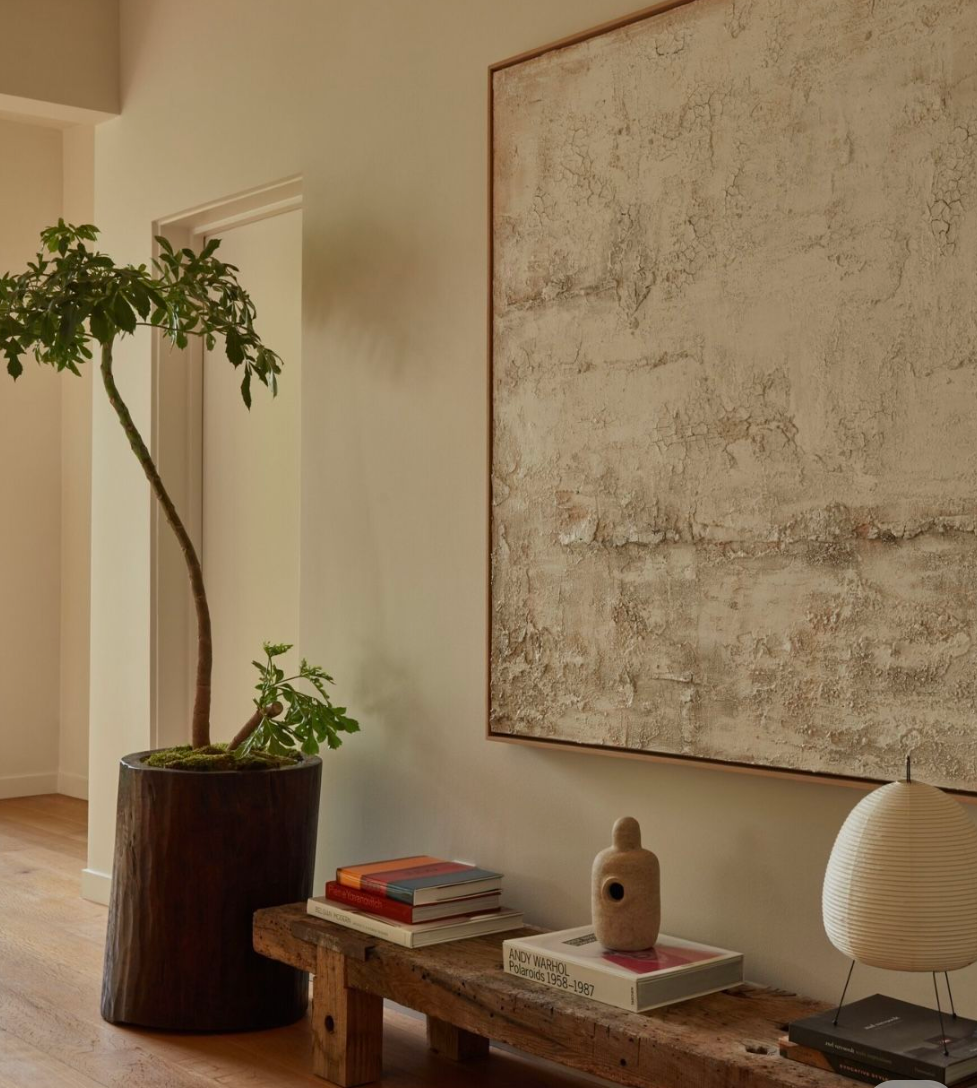
A rustic timber bench can do the job without a lot of effort.
Add a table lamp, a couple of favourite books, and a plant — then call it a day. Keep it simple, easy-breezy wins the day,
Sourced on Pinterest (Designer unknown).
Fix the lighting, because overheads are rarely helping
Very few entryways are improved by a cold ceiling light switched on in a rush.
The right light changes the arrival immediately. A table lamp on a console, a wall light with a gentler glow, or even a simple bulb change can soften the mood and make the whole space feel more human. What was once giving bleak rental corridor can start to feel warm, calm, and considered.
Light is not decoration in an entryway. It is atmosphere control.
Let the space say something specific
This is where an entryway either starts to come alive or remains stubbornly forgettable.
A functional setup is useful, but usefulness alone rarely creates any emotional response. What gives an entryway depth is specificity. A framed artwork you actually love, a mirror with age to it, a ceramic vessel collected on a trip, or a runner with texture and irregularity will always carry more presence than something vaguely beige chosen to offend nobody.
This is not about creating a themed moment or loading the area with decorative clutter. It is about letting the home begin with a pulse.
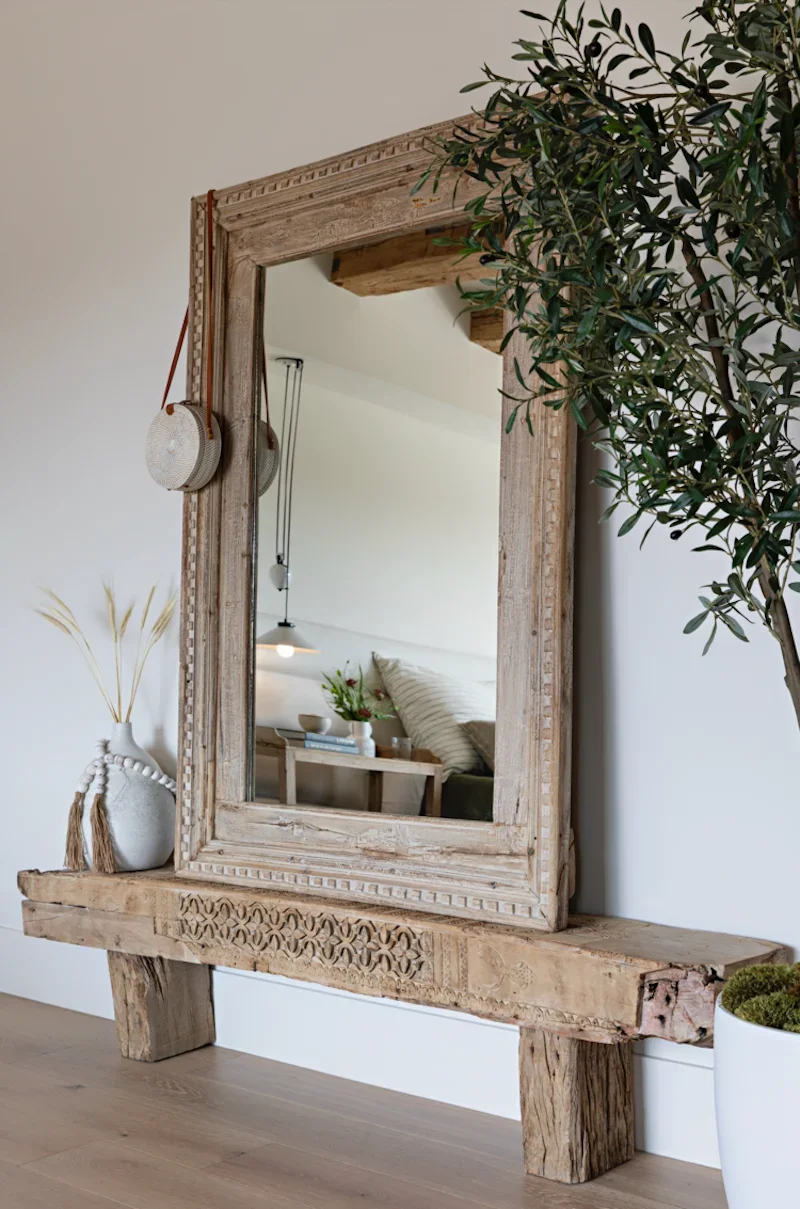
Entryway Reflections
Aged timber bench and bleached carved mirror make the perfect partners in this LA Home.
Design by Intimate Living Interiors.
Edit the life out of it
An entryway does not need more things to feel finished. It usually needs fewer.
Too many hooks create visual noise. Too many shoes on display make the space feel weary before you have even stepped out of yours. Too many decorative objects make the whole setup look like it is trying very hard to justify itself.
The best entryways have breathing room. They feel edited, not sparse; layered, not crowded. That restraint is often what makes the difference between a space that feels calm and one that feels mildly exhausting.
The question worth asking before you buy anything
Before you order a console, hang new hooks, or save another image of somebody else’s hallway, ask yourself this: what do I want to feel the second I walk through the door?
That question is far more useful than any styling checklist.
Perhaps the answer is relief. Perhaps it is warmth, or a sense of exhale, or simply the feeling that your home reflects who you are now rather than some earlier version of you that has been limping along in the background. Whatever the answer is, it gives you something solid to design towards.
Once the feeling is clear, the decisions sharpen. You stop buying random useful things and start shaping the entry around the way you actually want to arrive.
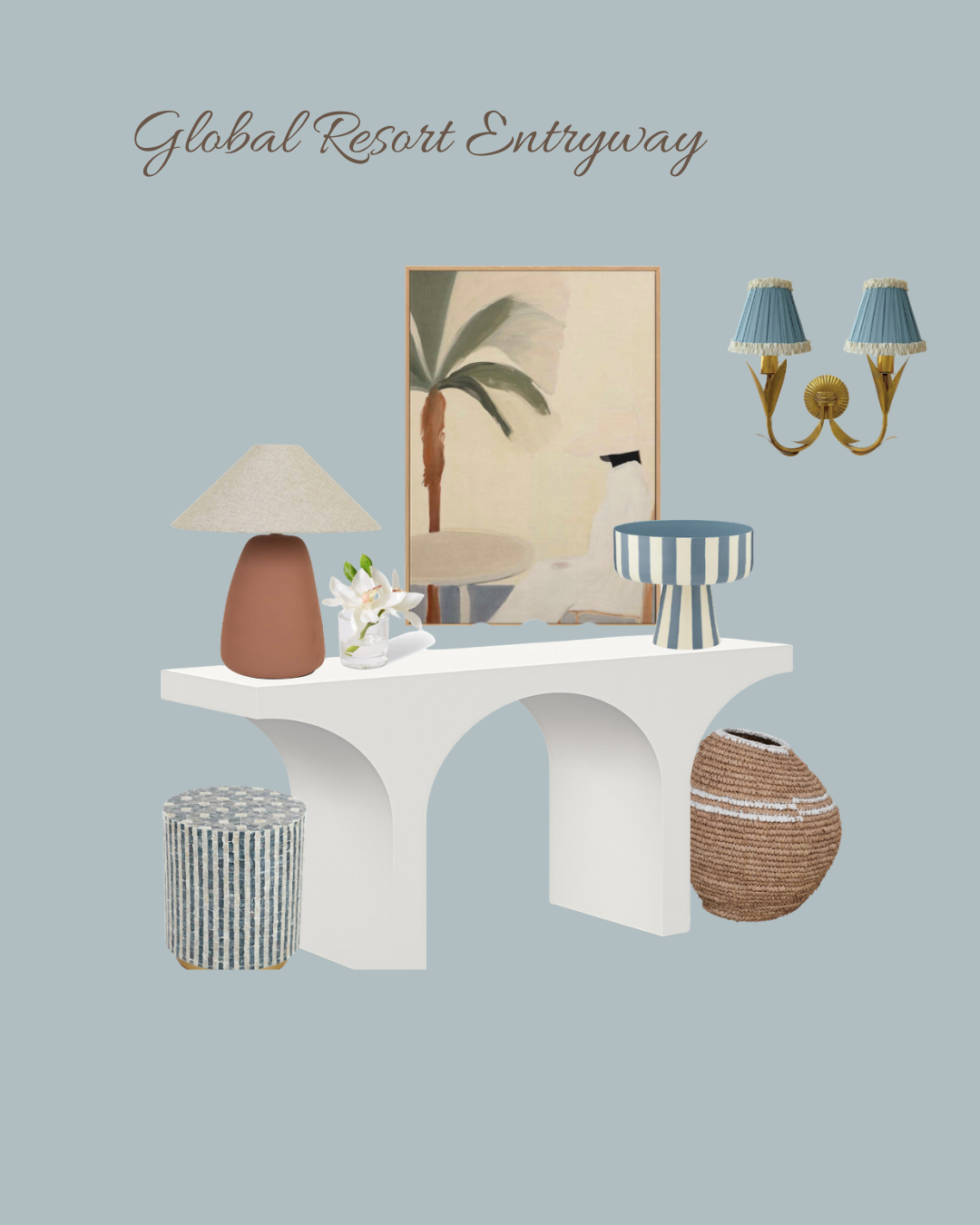
I’m drawn to stripes for the way they instantly evoke faraway places and a sense of escape.
This entryway layers a sculptural Mediterranean-inspired console with striped ceramic, terracotta, capiz shell, and woven texture for a look that feels warm, relaxed, and quietly transportive.
I
sland-inspired artwork and an aged brass wall sconce finish the story.
Design by Studio Halo & Fitz
One small shift, whole-home effect
I love entryways because they are small enough to change without a full design overhaul, but influential enough to alter the mood of the whole house.
Change the lighting and the space softens. Add one grounded piece and the area stops feeling temporary. Bring in something with texture, age, or memory and the home starts speaking in a more personal voice from the first step inside. That is not a minor detail. It is a completely different arrival.
And often, that is where the shift begins.
If your entryway feels flat, makeshift, or like it belongs to a version of your home you have already outgrown, a thoughtful redesign can change the tone immediately.
An outside eye…
If you’d like help carrying this shift through from your entryway and into the rest of your home — tailored to your layout, light, and the pieces you already own — that’s exactly what I do inside my e-design packages.
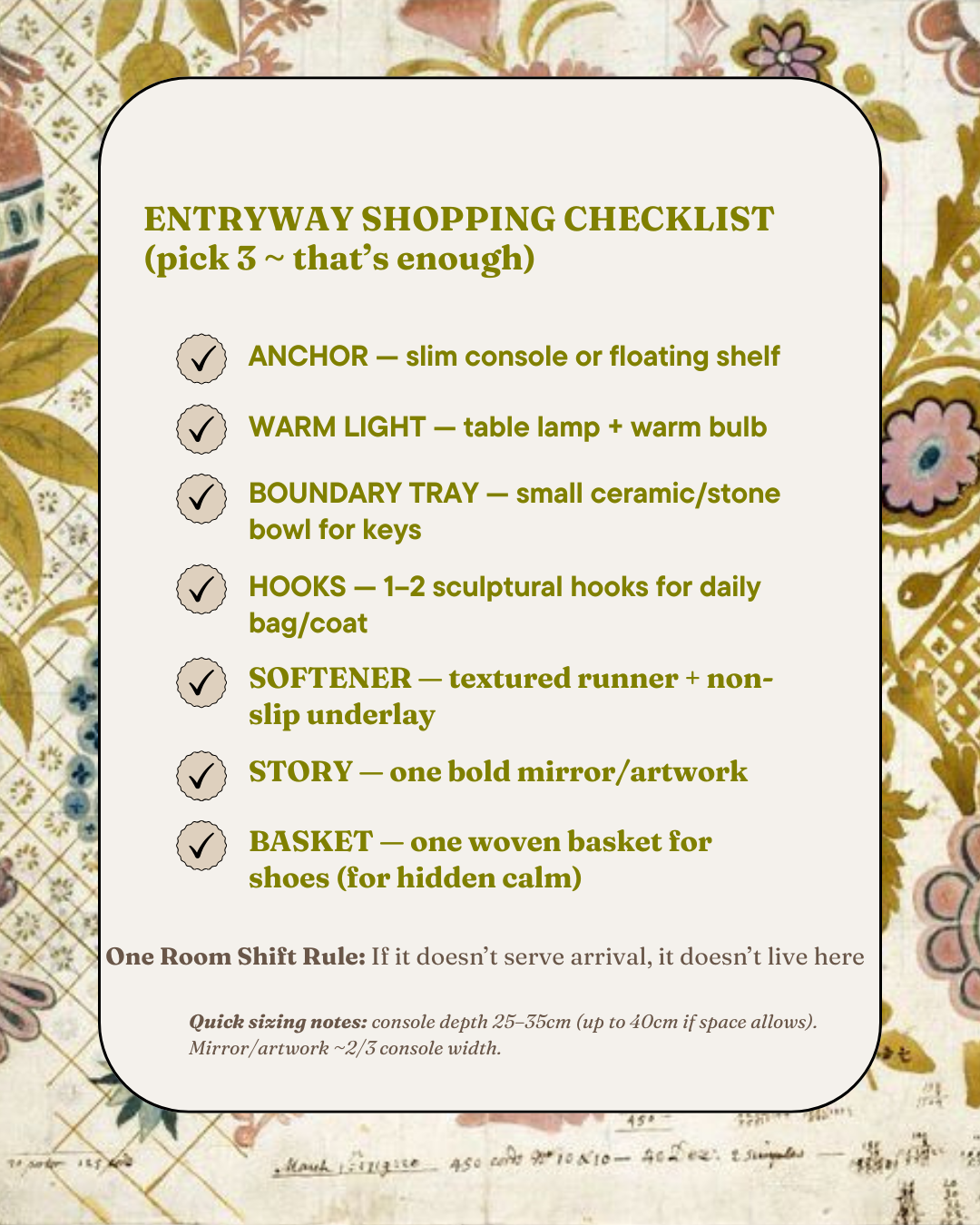
ENTRYWAY CHECKLIST - WHAT TO SHOP FOR TO SET THE RIGHT TONE