

Moved Home (and Nothing Fits)? A Calm 6-Step Decision Sequence That Makes a House Feel Like Yours
You’ve moved home expecting everything to fall into place. The boxes are gone (well, mostly gone). The furniture is in… but somehow the room still feels wrong and looks unfinished.
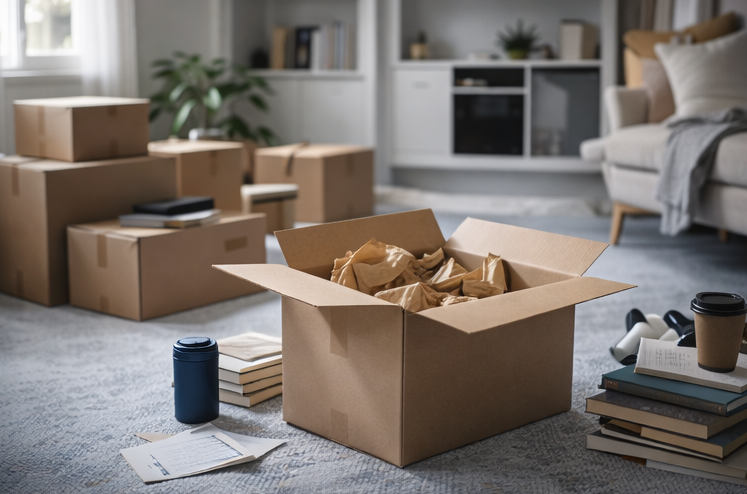
The furniture that worked before feels wrong.
The layout feels unsettled.
And nothing quite lands the way it used to.
The sofa looks too big in this space (or too small). The rug you loved suddenly feels busy. The dining table is blocking the flow. You’re surrounded by “perfectly good” things that don’t belong together anymore — and the fastest response is usually the most expensive one: buying more.
Here’s the truth I want you to hold onto before you do anything else:
Your home doesn’t need more stuff. It needs the right order — a calm 6-step decision sequence.
When decisions happen in a calm sequence, the room starts to settle — and you stop buying “maybe” pieces.
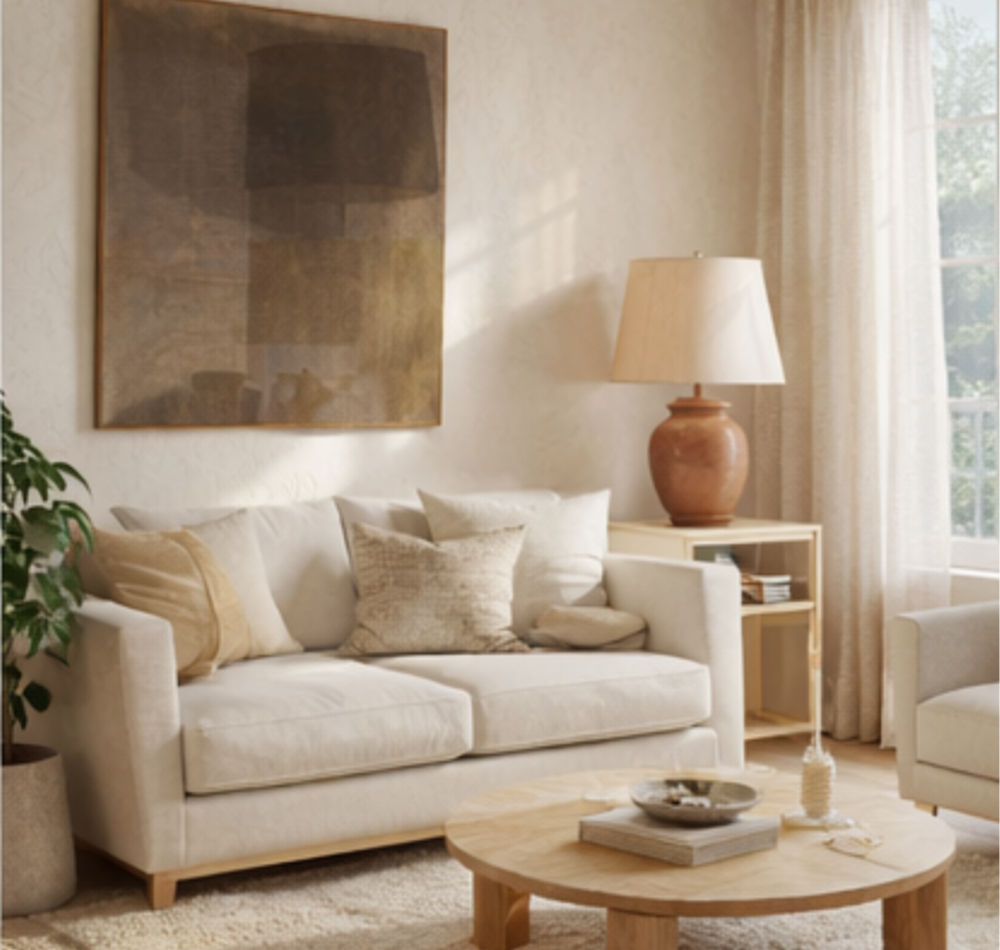
The Calm 6-Step Decision Sequence
Purpose
Measure
Layout
Keepers
Palette
Finishing touches
Now let’s walk through each step.
Step 1: Start with purpose (not Pinterest)
Before you measure a wall or buy a lamp, ask this:
How do you want each room to feel?
What does it need to do for you most days?
What’s the biggest friction point right now?
A living room might need to be “soft landing + conversation.” A bedroom might need to be “quiet + restoration.” A dining space might need to be “easy + welcoming,” not “formal.”
This step matters because it becomes your filter. When you know the purpose, it gets easier to say no — to clutter, to trend-led choices, and to anything that doesn’t support the life you’re actually living in the space.
Tiny action: Write one sentence per room. Keep it visible while you make decisions.
Step 2: Measure the room (so you stop second-guessing)
After a move, the same furniture can behave completely differently. A sofa that felt airy in your old place can suddenly dominate. A hallway that looked “fine” during inspection can become the bottleneck you trip over every day.
Measurements aren’t about being rigid — they’re about removing doubt.
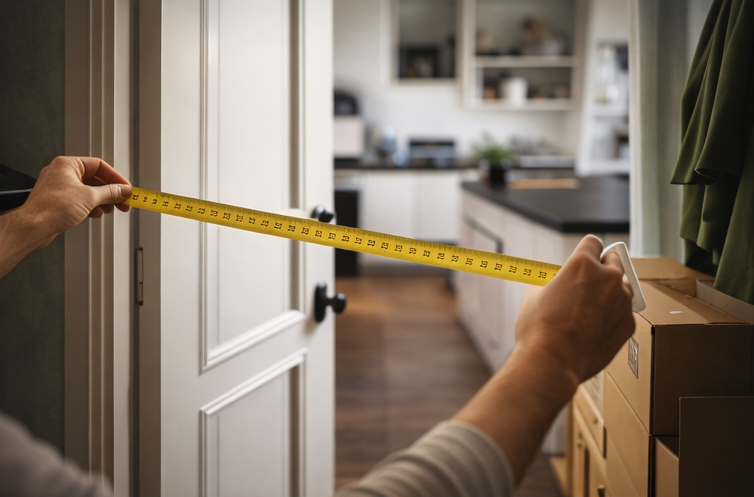
Measure:
wall lengths
window placements
door swings
key walkways (the paths you use most)
Then sketch a quick rough plan (it doesn’t need to be pretty). The goal is clarity: what can realistically fit and still allow the room to breathe.
Tiny action: Prioritise “clear pathways” over filling space. Flow is a form of calm.
Step 3: Lock in layout before you shop
If you’ve been moving pieces around and still can’t make it feel right, it’s rarely because you need different cushions. It’s usually because the layout isn’t supporting the room’s purpose.
Layout is the quiet backbone of a space. When it’s right, everything else becomes easier — and when it’s wrong, you can keep styling forever and still feel unsettled.
Try this:
Place the largest pieces first (sofa, bed, dining table).
Aim for one clear “anchor” (the thing the room orbits around).
Create at least one generous walkway where movement feels effortless.
If you’re stuck, choose the layout that makes daily life easiest — not the one that looks most like an image online. Real homes are allowed to be practical.
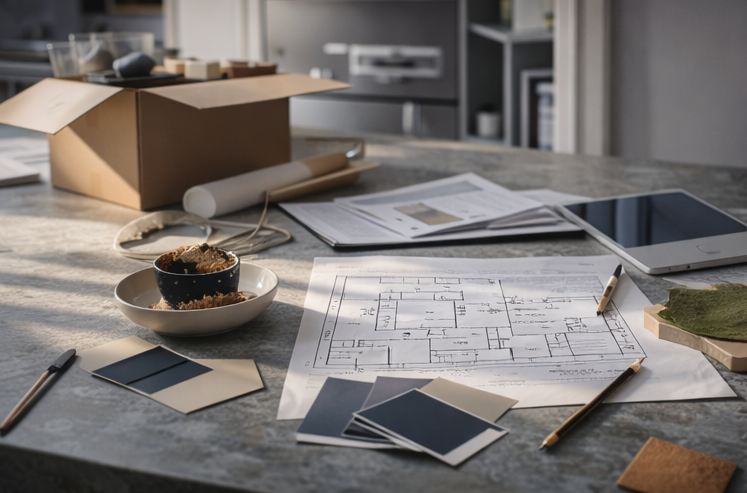
Tiny action: Take a photo of each layout attempt. You’ll see patterns (and problems) faster through a lens.
Step 4: Choose the “keepers” (and stop negotiating with everything)
After a move, people often treat every item like it must be included. That’s where the overwhelm begins.
Instead, choose your keepers — the pieces that deserve to lead.
A keeper is something you genuinely love, or something that supports the room in a meaningful way. It might be:
a sofa with perfect comfort
a dining table with the right scale
an artwork that feels like you
a rug you’re emotionally attached to and that works in the space
Once you identify your keepers, you stop trying to force everything else to work around them. You give yourself permission to let the “almost right” pieces become temporary, relocated, or released.
Tiny action: Pick 3 keepers per main space. Everything else is flexible.
Step 5: Set a palette that suits the new light
This is where cohesion starts to show up — not because everything matches, but because everything relates.
A calm palette doesn’t mean neutral-only. It means the colours and materials have a shared story.
A simple palette framework:
Base: walls + big upholstery (quiet, consistent)
Bridge: timber tones + metals + key textiles (repeats across rooms)
Accent: a smaller set of deeper tones (used intentionally)
If you moved homes and now things clash, it might be because the undertones changed. Warm light in your old home can make a cool grey look crisp; in a different light, it can look flat or cold. Your palette needs to respond to this space.
Tiny action: Pull 5–7 samples together (paint, fabric, timber tone). Lay them in daylight. If it feels calm there, it will feel calm in the room.
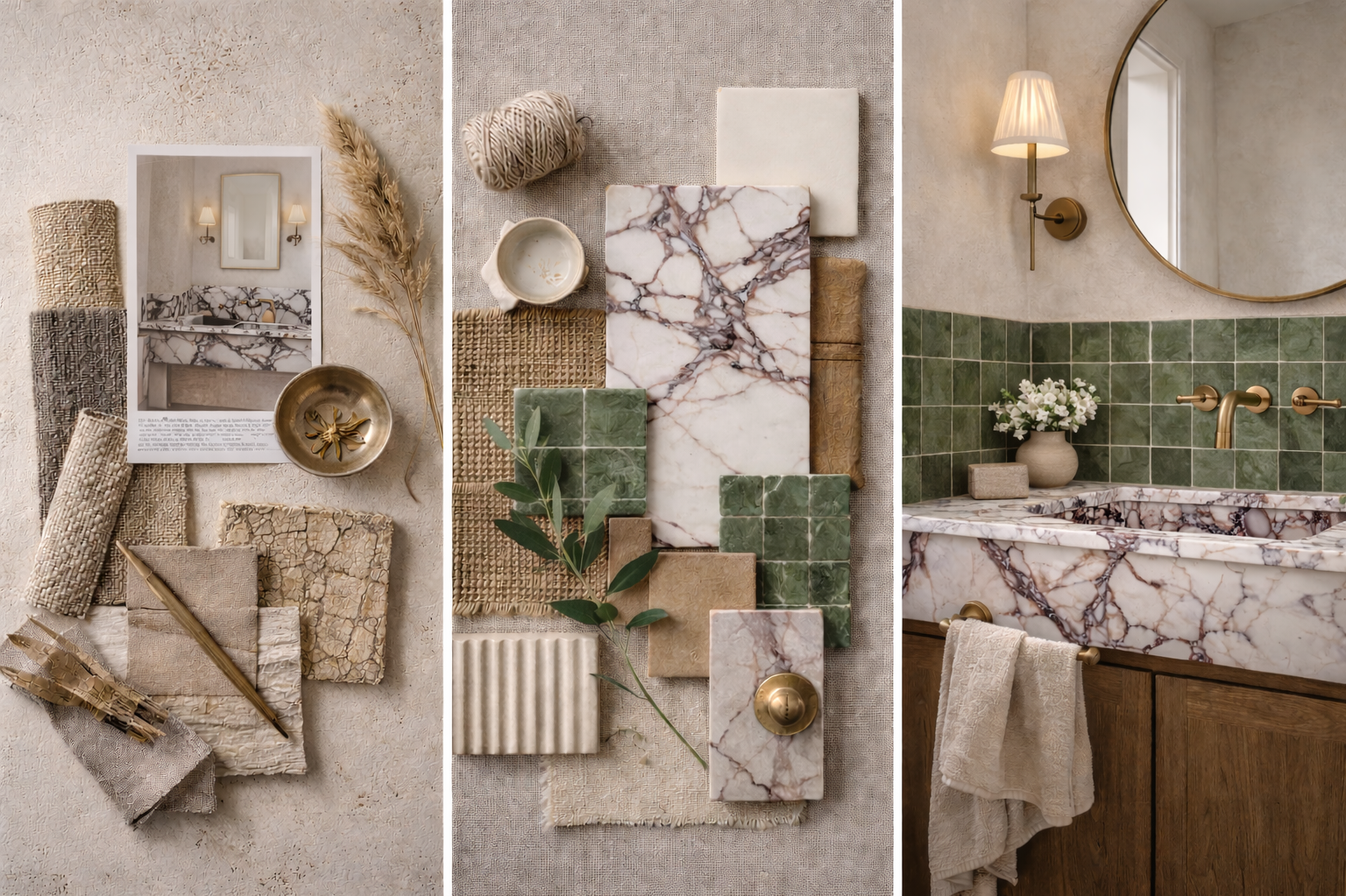
Tiny action: Start with inspiration, then order samples. Lay everything together in daylight before you commit.
Step 6: Finish with the “small shifts” that create the mood
Only now do we style and refine — because now those final details actually land.
This is where a room goes from functional to finished:
correct rug size (or better placement)
lighting that softens the edges
one grounding anchor (art, mirror, or statement piece)
layered texture (linen, wool, timber, ceramics)
editing (removing the extra that dulls the whole room)
The temptation after a move is to rush the finishing step because it’s the most visual. But when you do it last, you stop wasting money — and you get a home that feels coherent, not crowded.
Tiny action: If you’re adding anything new, make it a “bridge” piece first (one that ties what you already own together).
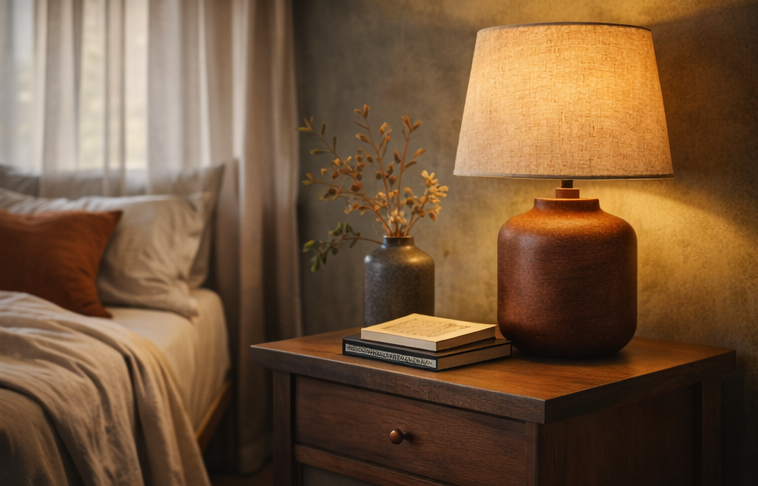
This is the same calm decision sequence I use inside my e-design packages — Postcard Edit (refine) and Passport Plan (reimagine).
Instead of guessing what to change next, you receive a clear, structured plan for the room.
When to get help (and which service fits)
If you’re reading this and thinking, “Yes — but I still can’t see what’s off,” that’s completely normal. After a move, you’re often too close to your own space to edit it calmly — especially when everything technically works, but nothing feels right.
If you want a calm outside eye, there are two ways to work with me:
Postcard Edit for refining what’s almost there, or Passport Plan for reimagining one meaningful room.
Choose Postcard Edit if:
The room is working, but it doesn’t feel finished (it’s almost there).
You want a confident outside eye on what to adjust, what to keep, and what to add.
You’re after a fast reset with a short, clear list of next steps.
Choose Passport Plan if:
You’ve moved and the room now needs a deeper rethink (layout, key pieces, and the overall direction).
You want a more complete plan and a more considered sourcing list to build the space properly.
You’re ready to make decisions once — and stop second-guessing.
If you're still unsure: the Thread Test will tell you whether you're refining or reimagining — no guessing required.